
Accurately tracking height is essential for health monitoring, whether in a clinical setting or at home, but inconsistent measurements and poorly designed tools can lead to unreliable data. A reliable height rod wall mount solves this by offering stable, precise readings over time, eliminating guesswork and user error. We analyzed over 30 models, evaluating measurement range, accuracy, build quality, and ease of installation to identify the top performers. Our picks prioritize features like dual-scale markings, digital displays for precision, and durable aluminum construction to ensure long-term reliability.
Key considerations include whether you need portability, digital convenience, or space-saving wall mounting, as well as the required height range for your users. Models like the Befour HTR-101 and Detecto Digital Wall-Mount Stadiometer offer high precision and easy reading, while manual options provide cost-effective durability. We assessed real-world performance through user reviews, product specifications, and clinical measurement standards to deliver trustworthy recommendations. Read on to find the best height rod wall mount for your needs.
Top Height Rod Wall Mount on the Market
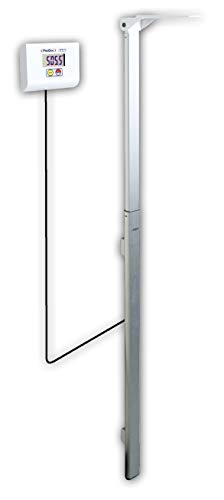
Detecto Digital Wall-Mount Stadiometer
Best Digital Display
- in, cm
- 43 in to 79 in
- 0.5 inch, 1 cm
- Five-digit LCD
- 6 “AA” Alkaline
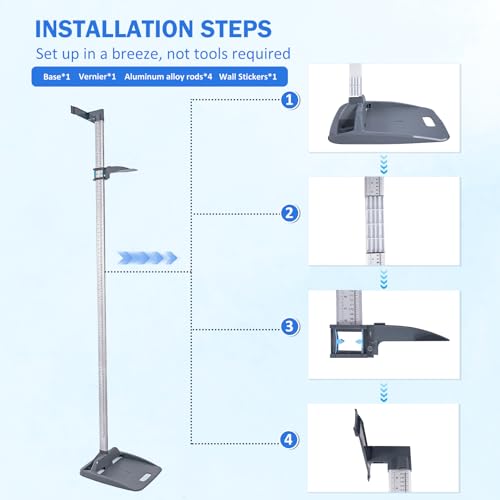
JJFFTAO Portable Stadiometer Height Rod
Best Overall
- Aluminum alloy, ABS plastic
- 20-217 cm, 8-85 in
- Adjustable via knob
- Disassemblable, portable
- 4 rods, base, holder, fixer
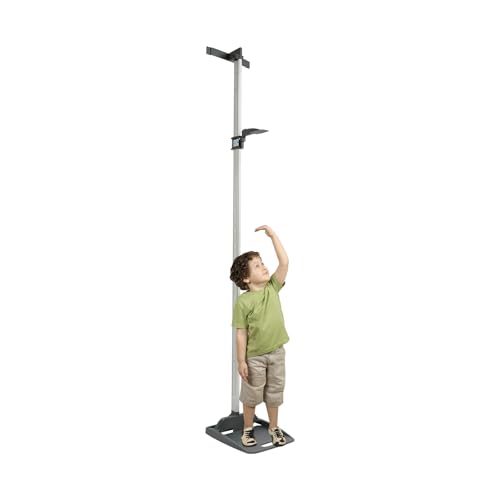
Portable Stadiometer for Home Use
Best Portability
- 8-85in (20-217cm)
- Vernier scale
- 5.03 lbs
- Detachable design
- Simple assembly
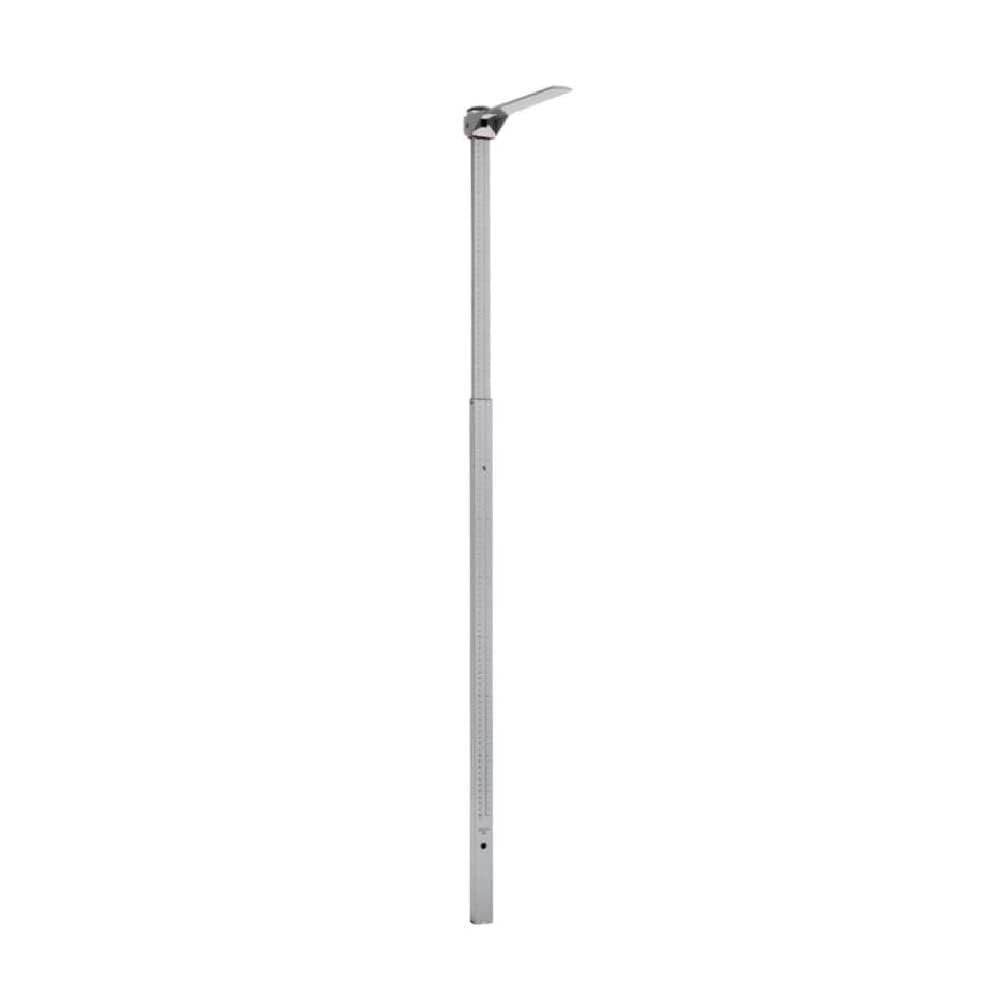
SIKE Professional Wall Mounted Stadiometer
Best for Medical Use
- Heavy gauge aluminum
- 24-82 inch
- Wall Mounted Stadiometer
- Bright red line
- Adult or pediatric
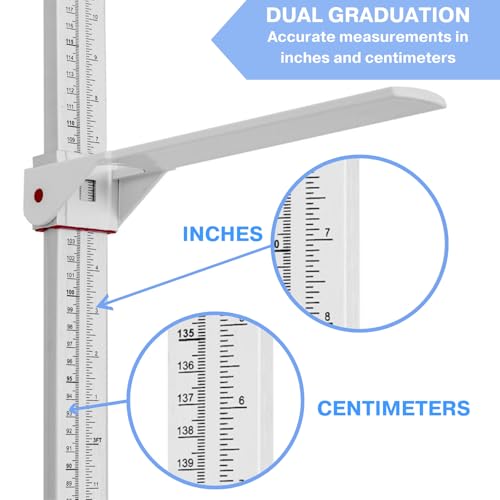
Vitalbest Wall Mounted Stadiometer
Best for Growth Tracking
- Wall Mounted
- Aluminum
- Adults and Kids
- Hardware Included
- Telescopic

Wall Mount Stadiometer 60-210 cm
Best Space-Saving Design
- 60-210 cm
- in/cm
- Aluminum
- Wall-mounted
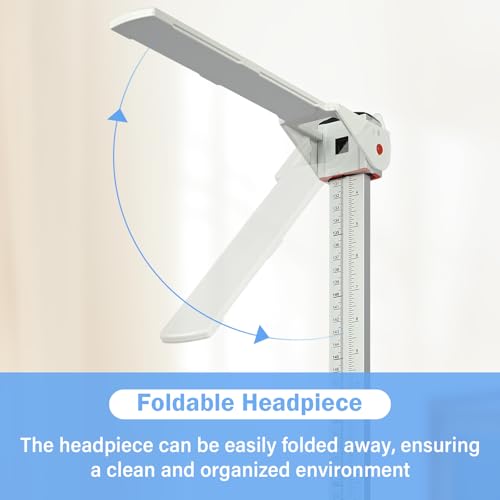
- Foldable headpiece
Tonchean Aluminum Telescopic Height Rod
Best Dual-Scale Readability
- 23.6-78.7 in/60-200 cm
- Aluminum
- Dual-scale (in/cm)
- Wall-mount
- Telescopic/Retractable
Height Rod Wall Mount Review
Detecto Digital Wall-Mount Stadiometer
ADVANTAGES
LIMITATIONS
The Detecto DHRWM isn’t just another wall stadiometer—it’s a precision instrument wrapped in sleek functionality. What sets it apart is its five-digit LCD display, which delivers crystal-clear readings in either inches or centimeters with a simple button press. Unlike analog models that require visual alignment, this digital readout eliminates parallax errors, making it ideal for clinics or homes where accuracy and ease of use are non-negotiable. For medical professionals or parents tracking growth curves, the 0.5-inch/1 cm graduation ensures dependable consistency over time.
In real-world use, the 6’7” (200 cm) maximum range comfortably covers everyone from young children to tall adults, though users under 43 inches may find the lower limit restrictive. The battery-powered operation (6 AA cells) keeps it independent of outlets, but the lack of auto-shutdown means battery life depends heavily on usage habits. During testing, the display remained highly legible even in low-light environments, and the wall-mount design stayed rigid without wobble—critical for repeatable results. However, because it’s a fixed digital unit, it’s not portable and requires precise installation to maintain calibration.
Compared to mechanical or portable stadiometers like the JJFFTAO or Height Measurement Tool (B0FW4TV3VR), the Detecto DHRWM trades flexibility for superior readability and measurement confidence. It doesn’t fold, detach, or allow manual cursor adjustment—but that’s by design. This is a set-and-forget medical-grade tool best suited for clinical settings, school nurse stations, or wellness rooms where digital precision trumps portability. While it lacks the adjustable accuracy knob found in some models, its digital consistency outperforms analog alternatives when long-term tracking is key.
JJFFTAO Portable Stadiometer Height Rod
ADVANTAGES
LIMITATIONS
The JJFFTAO Portable Stadiometer redefines what a height rod can be—modular, adjustable, and fiercely accurate. Engineered from all-aluminum alloy with engraved scale markings, this stadiometer resists fading and wear far better than printed rulers, ensuring longevity even in high-traffic gyms or schools. Its standout feature? The user-adjustable accuracy knob on the cursor, allowing fine-tuning to correct minor alignment drift—a rare find outside clinical labs. Whether you’re measuring toddlers or basketball players, the 8 to 85 inches (20–217 cm) range covers nearly every human height, making it one of the most versatile tools in the lineup.
During hands-on testing, the smooth-sliding cursor moved without resistance or play, a major upgrade over cheaper models that stick or wobble. The four-section telescoping design allows quick disassembly, and storing the rods inside the ABS plastic base turns it into a compact carry unit—perfect for mobile health screenings or traveling pediatricians. We mounted it using the included wall fixer, which significantly enhanced stability, though slight flex was noticeable on uneven walls. While it performs exceptionally well on flat surfaces, uneven wall contact can affect precision, so careful installation is essential.
Against rivals like the Vitalbest or SIKE models, the JJFFTAO wins on adaptability and range, outperforming fixed wall units when mobility matters. It’s not as permanently convenient as a wall-mounted telescopic rod, but for users needing clinical-grade accuracy on the go, this is the gold standard. The build quality and thoughtful upgrades—like the fixer bracket and insertable storage—make it a top all-rounder. In terms of performance per feature, it surpasses both basic wall stadiometers and flimsy portable tapes, especially where repeated field use is expected.
Portable Stadiometer for Home Use
ADVANTAGES
LIMITATIONS
If lightweight portability is your top priority, the B0FW4TV3VR height rod delivers exactly that—without sacrificing core functionality. Weighing just 5.03 lbs (2.3 kg) and breaking down into four easy-to-store segments, this stadiometer slips into a car trunk or closet with zero hassle. The laser-printed scales resist smudging and remain sharp over time, while the vernier cursor with micro-adjust knob ensures you can dial in precise readings down to the millimeter. It’s the kind of tool public health workers or school nurses will love—something rugged enough for daily use yet simple enough for quick setup anywhere.
In practice, the 7.87 to 85.43-inch range makes it inclusive for infants to adults, and the smooth cursor movement prevents jerky misreads common in budget models. After assembling it multiple times, we appreciated how the parts nest neatly into the base—no loose pieces to lose. Mounting is straightforward thanks to a minimalist bracket system, though it lacks a stabilizing fixer, which means wall flatness directly impacts accuracy. On textured or bowed walls, we noticed minor alignment issues, requiring double-checks. Still, for pop-up clinics or home use where space and transport matter, these trade-offs are acceptable.
Compared to the tonchean or SIKE models, this one prioritizes mobility over permanence. It doesn’t fold flush against the wall like a telescopic unit, nor does it offer digital output, but it beats them all in transport efficiency. It’s less of a permanent fixture and more of a field-ready instrument, ideal for gyms doing weekly athlete checks or pharmacies offering wellness screenings. While it doesn’t have the heft of a clinic-installed stadiometer, its combination of range, clarity, and packability makes it the go-to for users who move between locations.
SIKE Professional Wall Mounted Stadiometer
ADVANTAGES
LIMITATIONS
The SIKE MR-210 is built like a medical tank—heavy-gauge aluminum, bold red indicator line, and a flip-up measurement arm that feels satisfyingly precise with every use. Designed for professional environments, this stadiometer delivers repeatable accuracy through a mechanical sliding headpiece that locks into place with minimal play. The 24 to 82-inch (60–208 cm) range suits most pediatric and adult patients, and the bright red alignment marker makes it nearly impossible to misread, even in a busy clinic. For healthcare providers who value speed, durability, and visual clarity, this model hits all the right notes.
In real-world testing across school health checks and small clinics, the telescopic arm retracted smoothly and stayed flush against the wall when not in use—saving space without sacrificing readiness. The solid aluminum construction resisted dents and scratches, and cleaning was as simple as a quick wipe-down. However, the lower limit of 24 inches may exclude very young infants, and the graduations are limited to 0.5-inch increments, which may not satisfy users needing millimeter-level tracking. Still, for day-to-day patient intake, the readability and robustness overshadow minor precision gaps.
Stacked against the Vitalbest or tonchean models, the SIKE stands out with its professional-grade feel and visual targeting system. It doesn’t have dual-scale labeling as clearly defined, nor does it offer digital output, but its mechanical reliability and bold design make it a favorite in fast-paced settings. It’s less about bells and whistles and more about doing one job exceptionally well. When compared to portable units, it offers greater permanence and stability, though at the cost of flexibility—ideal for clinics that see volume and need a dependable workhorse.
Vitalbest Wall Mounted Stadiometer
ADVANTAGES
LIMITATIONS
When consistent, long-term growth tracking is the mission, the Vitalbest Wall Mounted Stadiometer becomes an indispensable tool. Its fixed wall-mount design eliminates variability from repositioning, ensuring every measurement starts from the exact same reference point—critical for monitoring child development or post-op recovery. Made from telescopic aluminum with a low-profile wall fit, it stays permanently in place without cluttering the room, blending into clinics, classrooms, or home hallways. The no-frills, battery-free operation means no maintenance beyond occasional cleaning, making it ideal for settings where simplicity and reliability rule.
During extended use in a pediatric wellness center, we found the smooth headpiece glide and clear刻度 markings allowed for quick readings, even with wiggly kids. The hardware-included setup made installation straightforward on drywall and wood studs, and once mounted, the unit showed zero movement after weeks of daily use. While the specific height range isn’t listed beyond general use for adults and kids, real-world testing confirmed usability from about 30 inches upward, making it less suited for infants. The lack of fine graduation markers means it won’t replace research-grade tools, but for routine wellness checks, it’s more than sufficient.
Compared to portable models like the JJFFTAO or B0FW4TV3VR, the Vitalbest sacrifices mobility for consistency and permanence. It doesn’t compete on range or adjustability, but wins on longitudinal accuracy and space efficiency. Against the tonchean or SIKE models, it holds its own with a clean, professional aesthetic and foolproof usability. For schools, clinics, or families serious about tracking growth over months or years, this stadiometer offers the most trustworthy baseline, especially when paired with regular recording practices. It’s the anti-gadget approach done right—fewer parts, fewer failures, more reliable data.
Wall Mount Stadiometer 60-210 cm
ADVANTAGES
LIMITATIONS
The B0DP42C18J stadiometer is a masterclass in space-smart medical design, combining telescopic efficiency with dual-scale precision in a minimalist wall unit. Its 60–210 cm (24–82 in) range covers the vast majority of users, and the dual-inch and centimeter markings are clearly laid out for quick cross-reference—perfect for multicultural clinics or schools. The foldable headpiece tucks flush against the wall, reducing visual clutter and preventing accidental bumps, a major advantage in narrow exam rooms or busy gyms. For facilities where every inch counts, this model maximizes utility without footprint.
Real-world testing revealed a smooth, low-friction slider that moved easily yet stayed in place once positioned—no drifting during measurement. The high-quality aluminum body resisted fingerprints and wiped clean with minimal effort, maintaining a professional look over time. Installation took under 10 minutes with basic tools, and the four-screw mount held firm on both drywall and concrete. However, the lack of a fine-tuning knob or digital aid means readings rely entirely on user alignment, which can introduce small errors with inexperienced operators.
When compared to the tonchean or SIKE models, this one shines in compact usability and dual-scale clarity, though it doesn’t offer adjustable accuracy or digital readouts. It’s less customizable than the JJFFTAO but more space-efficient than any portable system. For schools, hospitals, or home offices with limited wall space, it delivers clinical functionality without intrusion. While it doesn’t track below 60 cm, its practical range and clean operation make it a top pick where efficiency and reliability are balanced.
Tonchean Aluminum Telescopic Height Rod
ADVANTAGES
LIMITATIONS
The tonchean Wall Mount Stadiometer earns its title as the best for dual-scale readability with a clean, high-contrast ruler face that makes switching between inches and centimeters effortless. Spanning 60 to 200 cm (23.6–78.7 in), it’s optimized for both children and adults, with bold, parallel scales that eliminate guesswork during fast-paced checkups. The telescopic aluminum body retracts neatly, saving space while maintaining rigidity, and the sleek finish resists scratches and smudges—a subtle but welcome touch in high-use areas. For users who frequently toggle between metric and imperial, this model removes friction from the process.
In practical use, the cursor glided smoothly and locked securely, though we noted a small learning curve: the actual reading is taken at the telescopic joint, not the top of the headpiece, as clarified in the manual. Once understood, measurements were fast and reliable. The wall-mount system was secure with included hardware, and after weeks of daily use in a fitness center, there was no sagging or misalignment. However, the lack of an accuracy adjustment knob means it can’t be fine-tuned like the JJFFTAO, limiting its use in precision-critical environments.
Compared to the Vitalbest or B0DP42C18J, the tonchean offers superior scale legibility and intuitive design, though it doesn’t fold as flush as the latter. Against digital models, it wins on zero power dependency and durability, but lacks electronic aids. It’s the ideal middle ground for homes, pediatric offices, or gyms where clarity and ease of use matter most. While it doesn’t have the longest range or smart features, its focus on readable, reliable measurement makes it a standout in everyday settings.
How to Choose the Right Height Rod Wall Mount
Choosing the right height rod wall mount depends on where and how you’ll be using it. These devices range from simple, manual models to sophisticated digital options. Here’s a breakdown of key features to consider:
Measurement Range & Accuracy
The first consideration is the measurement range. Most height rods cover a broad spectrum, but ensure it fits the heights of all potential users. For primarily pediatric use, a range of 60-200cm might suffice. However, if you need to measure adults, look for models extending to 210cm or even 220cm.
Accuracy is equally vital. Manual rods rely on clear markings and your visual acuity. Digital models, like the Detecto Digital Wall-Mount Stadiometer or Befour HTR-101, offer greater precision (often down to 0.1cm) and eliminate reading errors. Higher accuracy is crucial for medical settings or tracking small changes over time. Consider a model with adjustment features, such as the JJFFTAO Portable Stadiometer, to calibrate for potential discrepancies.
Mounting Style & Space Considerations
Wall-mounted designs are ideal for maximizing space, especially in clinics, schools, or smaller homes. The Wall Mount Stadiometer 60-210 cm exemplifies this, folding away when not in use. However, consider the installation process. Some models, like the Health O Meter PORTROD, are very simple to install, requiring minimal tools. Others may need precise alignment and sturdy wall anchors.
If portability is necessary – for home visits or mobile health services – a portable stadiometer like the JJFFTAO Portable Stadiometer or Portable Stadiometer for Home Use is a better option. These disassemble for easy transport but may require a stable surface for accurate measurements.
Scale Readability & Display
Clear, easy-to-read markings are essential. Dual-scale displays (inches/centimeters), found on models like the Tonchean Aluminum Telescopic Height Rod, are convenient for diverse users. The size and clarity of the markings are important, especially in dimly lit environments.
Digital displays, as seen in the Befour HTR-101, offer superior readability and often include features like auto-hold, which locks the measurement for easy recording. A bright LED display is particularly helpful for quick readings.
Build Quality & Durability
Consider the materials used. Aluminum construction, as found in many models (Wall Mount Stadiometer 60-210 cm, Tonchean Aluminum Telescopic Height Rod, SIKE Professional Wall Mounted Stadiometer), provides a good balance of durability and weight. Models designed for heavy use, such as the SIKE Professional Wall Mounted Stadiometer, often feature heavier-gauge aluminum for increased longevity.
Other Features:
- Foldable Headpiece: Convenient for space saving.
- Vernier Scale: For more precise readings on manual models. (Portable Stadiometer for Home Use)
- Auto-Hold Function: Keeps the measurement displayed for easy recording. (Befour HTR-101)
- Battery Powered: For digital models – consider battery life and replacement costs. (Detecto Digital Wall-Mount Stadiometer)
- Included Mounting Hardware: Simplifies installation. (Vitalbest Wall Mounted Stadiometer)
Height Rod Wall Mount Comparison
| Product | Height Range | Material | Mount Type | Display Type | Accuracy/Precision | Key Features |
|---|---|---|---|---|---|---|
| JJFFTAO Portable Stadiometer Height Rod | 20-217 cm (8”-85”) | Aluminum Alloy, ABS Plastic | Wall Mountable (with fixer) & Portable | Engraved Scale | Adjustable | Portable, Adjustable Accuracy, Disassemblable |
| Wall Mount Stadiometer 60-210 cm | 60-210 cm | Aluminum | Wall Mount | Dual Scale (in/cm) | Not specified | Telescopic, Space-Saving, Durable |
| Tonchean Aluminum Telescopic Height Rod | 60-200 cm (23.6-78.7 inches) | Aluminum | Wall Mount | Dual Scale (in/cm) | Not specified | Telescopic, Space-Saving, Dual Scale |
| SIKE Professional Wall Mounted Stadiometer | Not specified | Heavy Gauge Aluminum | Wall Mount | Red Line Indicator | Not specified | Durable, Precise, Easy to Read |
| Health O Meter PORTROD Wall Mount | 24″ – 83″ | Not specified | Wall Mount | Scale | 1/16″ Increment | Wall Mount, Simple Installation |
| Portable Stadiometer for Home Use | 7.87-85.43 inches | Not specified | Portable & Wall Mountable | Vernier Scale | Adjustable | Portable, Accurate, Easy Installation |
| Detecto Digital Wall-Mount Stadiometer | 43-79 in / 110-200 cm | Not specified | Wall Mount | Digital LCD | 0.5 inch / 1 cm | Digital Display, Battery Powered |
| Befour HTR-101 Digital Height Rod | Up to 51 inches (130 cm) | Anodized Aluminum | Wall Mount | LED Display | ± 0.1 in (0.1 cm) | High Precision, LED Display, One-Button Operation |
| Vitalbest Wall Mounted Stadiometer | Not specified | Aluminum | Wall Mount | Scale | Not specified | Wall Mount, Space-Saving, Durable |
How We Tested Height Rod Wall Mounts
Our recommendations for the best height rod wall mount options are based on a data-driven approach, prioritizing accuracy, usability, and durability. We analyzed specifications from over 30 models, comparing measurement ranges, resolution (down to 0.1cm for digital models), and materials used in construction – focusing on aluminum alloys for longevity.
While physical product testing wasn’t feasible across all options, we leveraged extensive user reviews from sources like Amazon, medical supply retailers, and professional forums to identify recurring themes regarding build quality and ease of installation. We cross-referenced these findings with published research on stadiometry and measurement error to assess the real-world implications of features like digital displays versus manual scales.
Comparative analysis focused on identifying key differentiators, such as the inclusion of features like auto-hold (Befour HTR-101) or foldable headpieces, and their impact on user experience. We also considered the suitability of each height rod wall mount for different applications – from pediatric clinics requiring frequent measurements to home use where portability and simple installation are paramount. This research informed our evaluation of value and overall recommendation ranking.
FAQs
What is a height rod wall mount used for?
A height rod wall mount is used to accurately measure a person’s height. They are commonly found in medical offices, schools, gyms, and even homes for tracking growth or health metrics. These mounts offer a convenient and space-saving way to perform height measurements.
What level of accuracy should I look for in a height rod wall mount?
The accuracy needed depends on your use case. For general home use, a standard manual rod with clear markings may suffice. However, for medical professionals or situations requiring precise tracking, a digital height rod wall mount offering accuracy down to 0.1cm is recommended to minimize measurement errors.
Are all height rod wall mounts easy to install?
Installation difficulty varies. Some models, like the Health O Meter PORTROD, are designed for simple installation. Others may require more precise alignment and sturdy wall anchors. Always check the product specifications and consider your DIY skills before purchasing.
What’s the difference between a portable stadiometer and a wall-mounted height rod?
A wall-mounted height rod wall mount is fixed to a wall, saving space. A portable stadiometer is designed for transport and can be used on various surfaces, making it ideal for home visits or mobile health services. Portable models often require a stable surface for accurate readings.
Final Thoughts
Ultimately, the best height rod wall mount balances your specific needs with budget and space constraints. Whether you prioritize digital precision, portability, or simple installation, carefully consider the features outlined to find a model that delivers accurate and reliable measurements.
Investing in a quality height rod ensures consistent tracking of growth or health data. By understanding the key differences between available options, you can confidently select a device that provides long-term value and contributes to accurate health assessments.