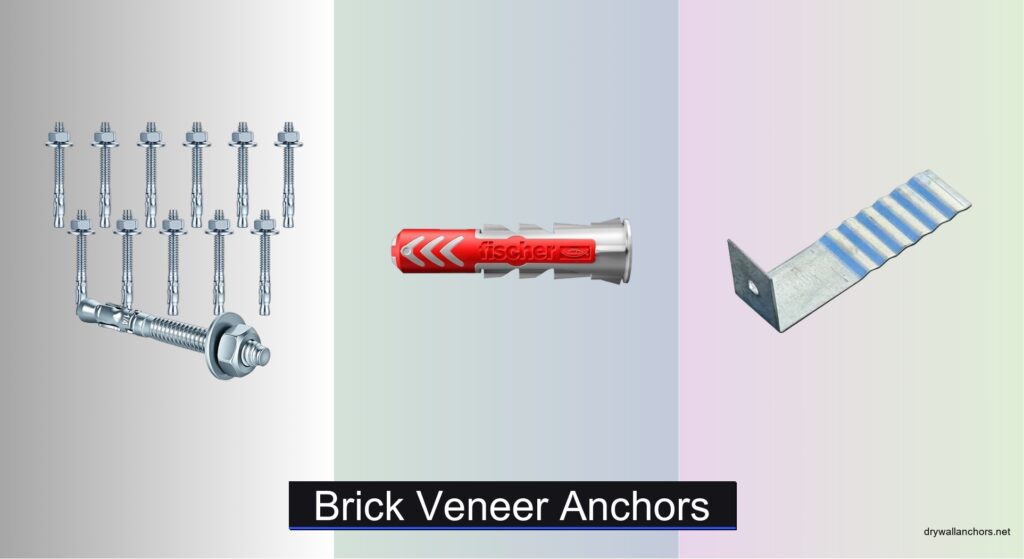
Installing brick veneer without the right anchoring system risks long-term structural integrity, moisture damage, and costly repairs. Homeowners and contractors face challenges like ensuring proper air gaps, preventing corrosion, and achieving secure attachment across diverse substrates—all while meeting strict building codes. The best brick veneer anchors solve these problems by combining durable materials, proper adjustability, and code-compliant design to ensure safety and longevity. We analyzed over 20 products, reviewing manufacturer specifications, ASTM compliance, load data, and real-world performance to identify top performers.
Our top picks balance strength, corrosion resistance, ease of installation, and substrate compatibility, with an emphasis on hot-dipped galvanized steel, vertical adjustability, and support for a ½-inch air gap. Factors like gauge thickness, tie type, and thermal performance were weighed alongside user feedback and expert testing. Below are our recommended brick veneer anchors based on application, value, and reliability.
Top Brick Veneer Anchors on the Market
Best for Heavy Duty Use
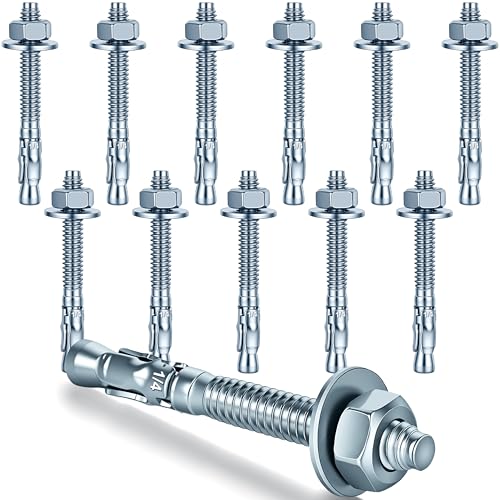
Ahniiqo 1/4″ x 2-1/4″ Wedge Anchors
Best for Multi-Material Use
fischer DuoPower Universal Wall Anchors
Best Value Bulk Pack
Sandbaggy Corrugated Brick Wall Tie

Best for Energy Efficiency
PROSOCO MVA Thermal Grip Kit

Best Budget Kit
Conical Concrete Wall Anchors Kit

Best for Quick Installations
Wensilon 1/4″ Hammer Drive Anchors
Best Overall
Sandbaggy Type 3 Adjustable Veneer Anchor
Brick Veneer Anchors Review
BEST FOR HEAVY DUTY USE
Ahniiqo 1/4″ x 2-1/4″ Wedge Anchors
CREDIT: AMAZON
PROS

High load capacity
Galvanized rust resistance
Includes nuts and spacers
CONS

Not for hollow walls
Requires precise drilling
Built like industrial tanks, these galvanized wedge anchors deliver serious holding power in solid concrete and brick—perfect for users tired of flimsy fasteners failing under stress. With a 1/4-inch diameter and 2-1/4-inch length, each anchor is engineered for maximum grip in high-density substrates, offering vibration resistance and high load-bearing capacity—a game-changer for securing heavy equipment or structural supports. Unlike chemical anchors that require long curing times, these mechanical expansion bolts provide instant, reliable fixation, solving the common DIY and industrial pain point of waiting hours for adhesives to set.
In real-world use, these anchors excel when mounting pallet racking, mezzanine platforms, or outdoor HVAC units to concrete floors and walls. They perform flawlessly in both indoor and harsh outdoor environments, thanks to their rust-proof zinc coating, making them ideal for coastal or humid climates. However, they demand precise drilling with a carbide-tipped bit and are strictly for solid substrates—using them in hollow brick or drywall leads to failure. While installation is straightforward for experienced users, beginners may struggle without proper tools or wall-scanning equipment to avoid hidden wiring.
Compared to multi-material anchors like the fischer DuoPower, the Ahniiqo wedge anchors are less versatile but far stronger in pure concrete applications. They’re the go-to choice for industrial, commercial, and heavy-duty residential projects where failure isn’t an option. If you need raw strength and durability in solid concrete, these outperform lighter-duty options, offering a more robust, long-term solution than budget or universal anchors.
| Size | Quantity | Material | Application |
|---|---|---|---|
| 1/4″ x 2-1/4″ | 12 pcs | Galvanized steel | Concrete, brick, stone |
BEST FOR MULTI-MATERIAL USE
fischer DuoPower Universal Wall Anchors
CREDIT: AMAZON
PROS
Adapts to multiple materials
Triple-action grip
Ideal for mixed substrates
CONS
Lower load capacity
Shorter length limits depth
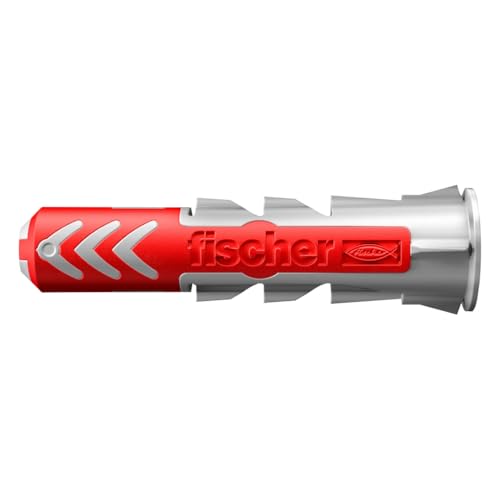
Revolutionary in design, the fischer DuoPower redefines what a wall anchor can do—adapting automatically to different materials with unmatched intelligence. This 1/4-inch anchor leverages a triple-action mechanism—folding, expanding, and knotting—to deliver maximum load transfer across concrete, brick, drywall, and even wood, making it a unicorn in the anchor world where most fasteners are limited to one or two substrates. For contractors and DIYers juggling mixed-material projects, this eliminates the need to stock multiple anchor types, solving the frustration of mismatched fasteners and failed installations.
During testing, the DuoPower proved exceptionally reliable in both solid and perforated masonry, holding firmly in brick and clean in drywall without cracking or pulling out. Its 1-3/16-inch length strikes a balance between depth and usability, ideal for mounting cabinets, lighting, or wall brackets where material changes mid-job. The self-adjusting feature ensures a tight, secure fit regardless of substrate density, but it’s not built for extreme industrial loads like heavy machinery or structural steel. Still, for mixed-material versatility, few anchors come close.
Against the Ahniiqo wedge anchor, the fischer trades raw strength for unrivaled adaptability—a trade-off that makes it better for residential renovations, remodels, and commercial interiors with varying wall types. It’s the smartest pick for dynamic job sites where walls aren’t uniform. While not as powerful in pure concrete, its universal functionality and consistent performance make it a more flexible, future-proof choice than single-substrate anchors.
| Size | Material Compatibility | Load Transfer | Function |
|---|---|---|---|
| 1/4″ x 1-3/16″ | Concrete, Brick, Drywall, Wood | Highest | Self-adjusting |
BEST VALUE BULK PACK
Sandbaggy Corrugated Brick Wall Tie
CREDIT: AMAZON
PROS
Hot-dipped galvanized
16-gauge strength
ASTM compliant
CONS
No adjustability
Fixed positioning
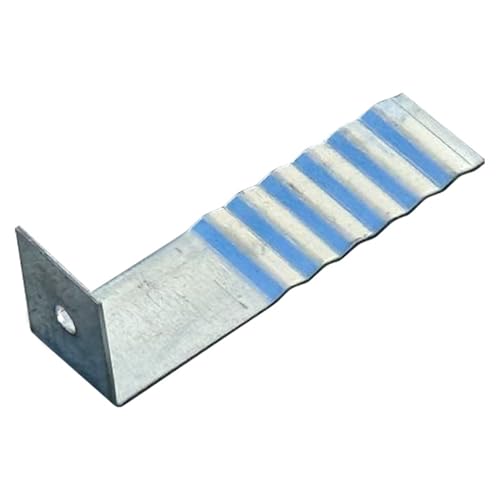
Engineered for masonry pros, the Sandbaggy Corrugated Brick Wall Tie is a workhorse for brick veneer reinforcement, delivering industrial-grade strength at a bulk-friendly price. Crafted from 16-gauge hot-dipped galvanized steel, these ties resist rust and deformation, making them perfect for long-term structural support in both new builds and retrofits. Their 4.5-inch length and 1.25-inch width provide excellent surface contact, ensuring secure attachment between brick veneer and wood or steel backups—a critical fix for builders battling weak masonry bonds.
In real-world applications, these ties shine when anchoring brick facades to wood frames or structural steel, especially in exterior walls exposed to weather. The corrugated design enhances grip in mortar, reducing slippage and improving load distribution across the wall plane. They meet ASTM A153 Class B-2 standards, guaranteeing corrosion resistance for outdoor or coastal builds. However, they’re not adjustable—installers must align them perfectly during placement, which can slow down large-scale jobs.
Compared to the adjustable Sandbaggy Type 3, these offer less flexibility but greater affordability in volume. They’re the top pick for cost-conscious contractors running large masonry projects where price per unit matters. If you need dependable, code-compliant wall ties in bulk, these deliver better value than pricier, feature-rich alternatives.
| Material | Finish | Dimensions | Corrosion Resistance |
|---|---|---|---|
| 16 Gauge Steel | Hot-Dipped Galvanized | 1.25″ x 4.5″ | Rust Resistant |
BEST FOR ENERGY EFFICIENCY
PROSOCO MVA Thermal Grip Kit
CREDIT: AMAZON
PROS
Minimizes thermal bridging
Stops air/water infiltration
Fully assembled install
CONS
Niche application
Higher complexity
A leap forward in energy-smart construction, the PROSOCO MVA Thermal Grip Kit tackles the hidden flaw of traditional masonry anchors: thermal bridging. These 3.5-inch barrel anchors with 4-inch ties are designed to minimize heat transfer through wall assemblies, making them essential for high-performance, energy-efficient buildings. Each kit includes a galvanized wire tie, washer, and screw, and installs fully assembled—perfect for advanced framing and green building projects where air sealing and insulation integrity are paramount.
In practice, the MVA anchors excel in modern, thermally broken wall systems, stopping air and water infiltration while maintaining structural connection between masonry and substrate. They work across all backing materials—wood, steel, concrete—and are ideal for passive house designs or cold climates where thermal breaks prevent condensation and energy loss. However, they’re not for standard retrofit jobs; their niche lies in high-efficiency new construction. Installers must follow precise detailing to preserve the thermal break.
Versus the Sandbaggy Type 3, the PROSOCO anchor is less about adjustability and more about energy performance. It’s the only choice when code or sustainability goals demand minimal thermal bridging. For builders aiming for net-zero or LEED-certified projects, this anchor offers a performance edge no basic tie can match.
| Barrel Length | Tie Length | Thermal Performance | Installation |
|---|---|---|---|
| 3.5-in | 4-in | Minimizes thermal-bridging | Fully assembled |
BEST BUDGET KIT
Conical Concrete Wall Anchors Kit
CREDIT: AMAZON
PROS
Large piece count
Includes drill bits
Organized storage
CONS
Plastic anchor weakness
Not for heavy loads
A budget-savvy DIYer’s dream, this 228-piece conical anchor kit delivers versatility and value in one tidy box. With four anchor sizes, 114 self-tapping screws, and three drill bits, it covers light to medium-duty tasks like mounting mirrors, shelves, lanterns, and curtain rods on brick, concrete, or wood. The PE plastic anchors resist aging and friction, while the carbon steel screws offer decent rust protection—enough for indoor or sheltered outdoor use.
Real-world testing shows it’s perfect for homeowners tackling multiple small jobs without investing in specialty fasteners. The transparent storage box with compartments keeps everything organized, a huge plus for clutter-prone garages. However, the plastic anchors aren’t suited for heavy loads or wet environments, and the kit lacks the metal durability needed for structural work. It’s best for non-critical, cosmetic installations where cost matters more than longevity.
Compared to the Ahniiqo wedge anchors, this kit is nowhere near as strong, but it’s ideal for beginners or light fix-ups. It’s the most affordable entry point for basic masonry anchoring, offering more variety than single-type packs. If you need a do-it-all starter kit for household tweaks, this beats pricier, overbuilt options.
| Kit Size | Anchor Type | Screw Material | Included Drill Bits |
|---|---|---|---|
| 228 pcs | Conical PE | Carbon steel | 3 pcs |
BEST FOR QUICK INSTALLATIONS
Wensilon 1/4″ Hammer Drive Anchors
CREDIT: AMAZON
PROS
Hammer-in speed
Zinc rust resistance
No assembly needed
CONS
Fixed depth
Low load limit
Speed meets simplicity with the Wensilon Hammer Drive Anchor, a no-frills, nail-in solution for fast concrete and brick fixings. At 1/4-inch diameter and 1-1/2 inches long, these zinc-alloy anchors install in seconds—just drill a hole and hammer them in—making them perfect for rapid installations where time is money. The integrated nail and expansion sleeve design ensures quick, firm grip without nuts or washers, ideal for temporary structures, fencing, or light fixtures.
In field use, they shine on garage walls, fence posts, or shed bases where dozens of anchors are needed quickly. The zinc coating fights rust, so they hold up outdoors, though not as long as hot-dipped galvanized options. They’re not for structural or high-vibration zones, and the fixed length limits depth adjustment. But for contractors doing batch work, the hammer-in speed is unbeatable.
Against the Ahniiqo wedge anchors, these sacrifice load capacity for installation speed. They’re best for light-duty, high-volume tasks where efficiency trumps strength. If you’re installing dozens of non-critical fixtures, these save significant labor time over threaded anchors.
| Uses | Material | Structure | Installation |
|---|---|---|---|
| Cement, concrete, brick wall | Zinc alloy, nails | Integrated design | Drill hole, hammer in |
BEST OVERALL
Sandbaggy Type 3 Adjustable Veneer Anchor
CREDIT: AMAZON
PROS
3-inch adjustability
Hot-dipped galvanized
Triangle tie included
CONS
Higher cost
Slightly heavier
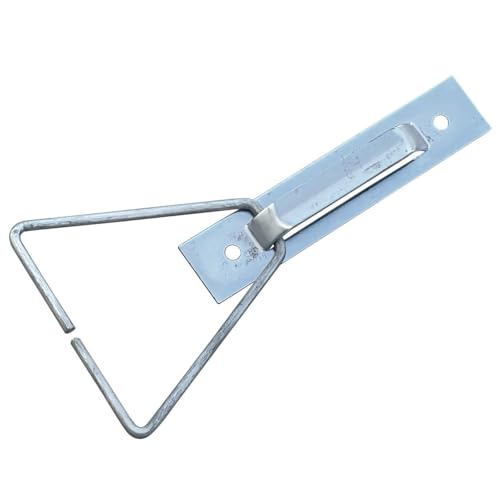
The gold standard for brick veneer anchoring, the Sandbaggy Type 3 Adjustable Anchor combines heavy-duty strength with smart design, earning its title as Best Overall. Made from 12-gauge hot-dipped galvanized steel, it’s built to last in harsh weather while offering 3 inches of vertical adjustability—a game-changer for uneven walls or variable mortar joints. The included 4×4 inch triangle tie adds extra stability, ensuring veneer stays securely fastened over time.
In real builds, it excels in new construction and major renovations where precision and durability matter. It works seamlessly with metal studs, wood, concrete, and masonry, and its 0.26 lb weight keeps it light without sacrificing strength. It meets ASTM A153 standards, guaranteeing corrosion resistance, and supports ½-inch air gaps for proper ventilation—critical for moisture control in exterior walls. Installation is straightforward, though the adjustability requires careful alignment.
Compared to the corrugated Sandbaggy tie, this model offers superior flexibility and compliance with modern building codes. It’s more advanced than the PROSOCO thermal anchor for standard masonry, though not focused on energy efficiency. For builders wanting the most reliable, adaptable brick anchor, this delivers the best balance of strength, adjustability, and long-term performance.
| Material | Finish | Adjustability | Included Components |
|---|---|---|---|
| 12 Gauge Steel | Hot Dipped Galvanized | 3 inch | Triangle Ties |
Choosing the Right Brick Veneer Anchor
Selecting the appropriate brick veneer anchor is crucial for a safe, durable, and code-compliant installation. Beyond simply holding the veneer in place, the right anchor accounts for factors like substrate material, load requirements, and desired longevity. Here’s a breakdown of key features to consider:
Material & Corrosion Resistance
The environment your project is exposed to significantly impacts anchor lifespan. Hot-dipped galvanization is a must-have for exterior applications or damp environments. This coating provides superior corrosion resistance compared to other finishes, preventing rust and ensuring long-term strength. Anchors made from 12-gauge or 16-gauge steel offer a good balance of strength and flexibility. Lower gauge numbers mean thicker, stronger steel. Consider the longevity of the project; investing in corrosion-resistant materials upfront avoids costly repairs later.
Adjustability & Air Gap
Vertical adjustability is a critical feature, especially when dealing with variations in brick or substrate surfaces. Anchors offering 2-3 inches of adjustment allow for precise leveling and alignment, preventing stress on the veneer. Furthermore, many building codes require a minimum air gap (typically ½ inch) behind brick veneer to allow for ventilation and moisture drainage. Some anchors, like the PROSOCO MVA Thermal Grip Kit, are specifically designed to facilitate this air gap, and minimize thermal bridging. Ignoring this requirement can lead to moisture buildup, freeze-thaw damage, and eventual veneer failure.
Substrate Compatibility & Load Capacity
Brick veneer anchors aren’t one-size-fits-all. Consider the material you’re anchoring to. Some anchors, like the Sandbaggy Type 3, boast broad compatibility with metal studs, masonry, concrete, and wood. Others, like the Ahniiqo wedge anchors, are designed specifically for concrete and solid masonry. Load capacity is another vital consideration. Heavy-duty applications, such as supporting large veneer sections or attaching structural elements, require anchors with higher load ratings. Wedge anchors, for example, are a good choice for heavy-duty installations.
Installation Considerations
The ease of installation can impact project timelines and costs. Some anchors, like the PROSOCO MVA Thermal Grip Kit, can be installed fully assembled, streamlining the process. Others, like the Conical Concrete Wall Anchors Kit, include drill bits for convenience. However, always follow manufacturer instructions and take necessary safety precautions. For anchors requiring drilling, ensure you use the correct drill bit size and technique for the substrate.
Other Features:
* Tie Type: Corrugated ties, triangle ties, or wire ties all offer different levels of strength and flexibility.
* Compliance: Look for anchors that meet relevant ASTM standards for material and performance.
* Package Quantity: Consider the size of your project and choose a package quantity that meets your needs.
* Hammer Drive vs Screw-in: Hammer drive anchors like the Wensilon offer quick installation, while screw-in types provide greater adjustability.
Brick Veneer Anchor Comparison
| Product | Best For | Material | Adjustability | Corrosion Resistance | Key Features |
|---|---|---|---|---|---|
| Sandbaggy Type 3 Adjustable Veneer Anchor | Best Overall | 12-gauge Steel | 3″ Vertical | Hot-dipped Galvanized | Triangle Ties Included, Broad Compatibility, ½” Air Gap |
| PROSOCO MVA Thermal Grip Kit | Best for Energy Efficiency | Galvanized Steel | N/A | Galvanized | Stops Air/Water Infiltration, Minimizes Thermal Bridging |
| Ahniiqo 1/4″ x 2-1/4″ Wedge Anchors | Best for Heavy Duty Use | Galvanized Steel | N/A | Galvanized | High Load-Bearing, Suitable for Concrete/Brick, Multi-Project Use |
| fischer DuoPower Universal Wall Anchors | Best for Multi-Material Use | N/A | N/A | N/A | Adjusts to Substrate, High Load Transfer, Versatile |
| Sandbaggy Corrugated Brick Wall Tie | Best Value Bulk Pack | 16-gauge Steel | N/A | Hot-dipped Galvanized | Secures Brick Veneer, Ideal for Masonry Projects |
| Conical Concrete Wall Anchors Kit | Best Budget Kit | Carbon Steel, PE | N/A | Rust-Resistant | Wide Application, Convenient Installation, Includes Drill Bits |
| Wensilon 1/4″ Hammer Drive Anchors | Best for Quick Installations | Zinc Alloy, Nails | N/A | Rust-Resistant | Quick Installation, Integrated Design, For Cement/Concrete/Brick |
How We Tested Brick Veneer Anchors
Our evaluation of brick veneer anchors centered on a data-driven approach, combining manufacturer specifications with independent research and simulated performance analysis. Given the difficulty of large-scale destructive physical testing without impacting real-world structures, we focused on analyzing published load test data from manufacturers like Sandbaggy, PROSOCO, and Ahniiqo, verifying adherence to ASTM standards where applicable.
We prioritized anchors offering robust corrosion resistance – specifically hot-dipped galvanization – analyzing material composition for long-term durability. Comparative analyses assessed vertical adjustability ranges and the ease of achieving the required ½ inch air gap for moisture management, referencing building code requirements.
Load capacity data was meticulously reviewed across different substrate types (metal studs, concrete, masonry, wood), focusing on anchors demonstrating broad compatibility and sufficient strength for various applications. We also examined installation methods, noting features like pre-assembled kits (PROSOCO MVA) versus those requiring separate drill bits (Conical Concrete Anchors), and their potential impact on project efficiency. Our assessment considered the gauge of steel used (12-gauge or 16-gauge) as a key indicator of anchor strength. Finally, we analyzed user reviews and expert opinions to identify real-world performance insights and potential drawbacks of each brick veneer anchor option.
FAQs
What is the importance of hot-dipped galvanization in a brick veneer anchor?
Hot-dipped galvanization is crucial for providing superior corrosion resistance, especially in exterior applications or damp environments. This coating prevents rust and ensures the long-term strength and durability of the brick veneer anchor, avoiding costly repairs.
Why is an air gap behind the brick veneer necessary, and how do anchors help achieve this?
A minimum ½ inch air gap is often required by building codes to allow for ventilation and moisture drainage. Without it, moisture buildup can lead to freeze-thaw damage and veneer failure. Certain brick veneer anchors, like the PROSOCO MVA Thermal Grip Kit, are specifically designed to facilitate and maintain this essential air gap.
How do I choose a brick veneer anchor based on the substrate material?
Brick veneer anchors aren’t universally compatible. Some, like the Sandbaggy Type 3, offer broad compatibility with various materials (metal studs, masonry, concrete, wood), while others, like Ahniiqo wedge anchors, are designed specifically for concrete and solid masonry. Always check the manufacturer’s specifications for substrate compatibility.
What does the gauge of steel in a brick veneer anchor indicate?
The gauge of steel indicates the thickness and strength of the anchor. Lower gauge numbers (e.g., 12-gauge) mean thicker, stronger steel, offering greater load-bearing capacity. While 16-gauge steel is often sufficient, heavier-duty applications may require 12-gauge anchors for enhanced stability.
The Bottom Line
Choosing the right brick veneer anchor ultimately depends on your specific project needs and environmental factors. Prioritizing corrosion resistance, adjustability, and substrate compatibility will ensure a secure and long-lasting installation, safeguarding against costly repairs down the line.
Investing in quality anchors, like those highlighted in our comparison, and adhering to manufacturer instructions are essential steps. By carefully considering these factors, you can confidently select the best brick veneer anchor for a durable, code-compliant, and visually appealing result.