Your wall-mounted air conditioner has suddenly lost its cooling power, leaving you sweating through another sweltering day. The culprit? Almost certainly clogged filters restricting airflow through your system. Learning how to clean wall-mounted AC filters properly takes just 15 minutes but delivers immediate results—restored cooling performance, fresher indoor air, and lower energy bills. Most homeowners don’t realize that dirty filters force their AC to work 15% harder, significantly increasing electricity consumption while circulating dust and allergens throughout living spaces. This guide walks you through the exact process to clean your wall-mounted AC filters correctly the first time, with model-specific instructions for both Easy Filter Plus and PM 1.0 systems.
Why Your Wall-Mounted AC Suddenly Loses Cooling Power (and How Filter Cleaning Fixes It)
When your wall-mounted air conditioner struggles to maintain comfortable temperatures despite running continuously, clogged filters are almost always the primary cause. As dust, pollen, and pet dander accumulate in the filter material, airflow through your system becomes increasingly restricted. Your AC unit must then work significantly harder to push air through the obstructed filters, leading to reduced cooling capacity and uneven temperature distribution throughout your home.
The performance impact becomes noticeable within just two weeks of normal operation. A heavily clogged filter can decrease your wall-mounted AC’s efficiency by up to 15%, forcing the compressor to run longer cycles that dramatically increase your electricity bill. Beyond the financial impact, restricted airflow creates additional problems including ice buildup on evaporator coils, premature wear on internal components, and the recirculation of trapped contaminants back into your living space.
Cleaning your filters restores optimal airflow through the system, allowing your wall-mounted AC to operate at peak efficiency. You’ll immediately notice stronger, cooler airflow from the vents, more consistent room temperatures, and the elimination of musty odors that often accompany neglected filter maintenance. For allergy sufferers, regular cleaning significantly improves indoor air quality by ensuring the filtration system captures airborne particles effectively rather than releasing them back into circulation.
Spotting the Critical “CF” Alert: Your Wall AC’s Filter Cleaning Warning System
Most modern wall-mounted air conditioners feature an intelligent filter-cleaning reminder system that eliminates guesswork from your maintenance schedule. When your unit displays “CF” on the indoor control panel, this critical indicator signals that your filters have accumulated enough debris to require immediate attention. The “CF” designation specifically means “Clean Filter,” and ignoring this alert compromises both performance and air quality.
Beyond the electronic reminder, several physical signs indicate your wall-mounted AC filters need cleaning. Reduced airflow from the vents—even when the fan speed is set to maximum—represents the most common symptom of filter obstruction. You might also notice that your living space takes significantly longer to cool down than it previously did, or that certain rooms remain uncomfortably warm while others reach the desired temperature.
Persistent musty odors when the AC activates often signal that trapped moisture and debris in clogged filters have begun to promote microbial growth. Increased energy consumption without changes to your usage patterns provides another red flag that your wall-mounted AC is working harder than necessary due to restricted airflow. Industry standards recommend cleaning wall-mounted AC filters every two weeks during peak cooling season to prevent these issues before they develop.
Essential Safety Steps Before Cleaning Your Wall-Mounted Air Conditioner
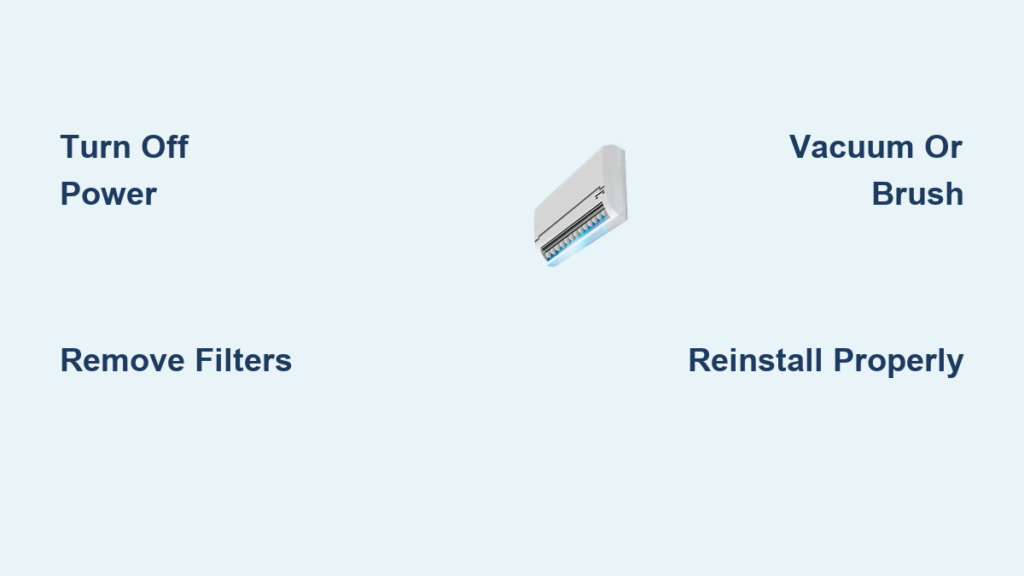
Before attempting to clean your wall-mounted AC filters, proper shutdown procedures protect both you and the equipment from electrical hazards. Start by pressing the power button on your remote control to turn the indoor unit off completely—this initial step stops the cooling cycle but does not fully isolate the system from electrical power.
For those with smart home integration, you can alternatively turn off the unit through the SmartThings application or compatible smart device interface. However, regardless of your control method, the critical next step involves locating the power cord and unplugging it from the wall outlet. Never attempt filter removal or cleaning while your wall-mounted AC remains connected to a power source, as this creates a serious electrical shock hazard even if the unit appears to be off.
Allowing 5-10 minutes for residual power to dissipate after unplugging provides an extra safety margin before you proceed with filter removal. This brief waiting period ensures capacitors and other internal components have fully discharged, creating a completely safe working environment for your maintenance procedure.
Removing Easy Filter Plus: The 30-Second Cleaning Process for Modern Units
The Easy Filter Plus system, featured in many contemporary wall-mounted AC models, prioritizes user-friendly maintenance with its innovative hinged attachment mechanism. To remove this filter, locate the hinged connection points along the filter frame—typically positioned at the top corners of the unit.
Apply gentle inward or downward pressure to these hinges until you hear a distinct clicking sound, which confirms the release mechanism has engaged. Once the clicking indicates successful release, slowly lift the Easy Filter Plus away from the unit. The filter should detach easily without requiring excessive force—never yank or pull sharply, as this could damage the delicate hinge mechanism.
Set the removed filter aside on a clean surface where it won’t collect additional dust during cleaning. Take this opportunity to visually inspect the filter compartment for any visible debris that might have accumulated behind the filter, using a soft brush to gently remove any residual dust from the housing before proceeding with filter cleaning.
PM 1.0 Filter System Removal: Handling Dual Filters Without Damage

Units equipped with the PM 1.0 Filter system require careful handling of two distinct filtration components. Begin by removing the pre-filter, which captures larger particles like dust and hair before they reach the more sensitive PM 1.0 filter. This initial layer protects the fine filtration material and extends its operational lifespan.
After removing the pre-filter, carefully extract the PM 1.0 filter from its housing. The attachment mechanism varies between manufacturers, so consult your model’s documentation if the removal process isn’t immediately apparent. Handle the PM 1.0 filter gently during extraction—never bend or fold the delicate material, as this can permanently damage the microscopic filtration structure designed to capture particles as small as 1.0 micrometer.
Vacuum vs. Brush: Choosing the Right Dust Removal Method for Your AC Filters

Once filters are removed from your wall-mounted AC unit, selecting the appropriate cleaning method prevents damage while ensuring thorough debris removal. For both Easy Filter Plus and pre-filter components, a vacuum cleaner with a soft brush attachment works effectively to remove loose particles without damaging the filter material.
Move the vacuum brush slowly across the filter surface, paying extra attention to areas with visible buildup. Hold the filter at an angle that allows dislodged particles to fall away rather than becoming further embedded. For filters where a vacuum isn’t available, a soft-bristled brush serves as an effective alternative for gently sweeping away accumulated dust.
The specialized PM 1.0 filter requires only dry cleaning methods—never attempt to wash this component with water, as moisture can permanently damage the fine filtration material. When in doubt about your specific filter type, consult your unit’s user manual for manufacturer-recommended cleaning procedures.
Perfect Filter Reinstallation: Avoiding the #1 Mistake That Reduces AC Efficiency

Proper reinstallation ensures your cleaned filters function effectively and maintain the proper seal within your wall-mounted AC system. For Easy Filter Plus systems, align the filter with the mounting points and gently press the hinges until you hear a distinct click confirming secure attachment.
The filter must lie completely flat against the mounting surface without gaps that could allow unfiltered air to bypass the filtration material. After installation, gently tug on the filter to verify it’s securely fastened before closing any access panels. Improperly seated filters represent the most common installation mistake, significantly reducing your wall-mounted AC’s efficiency despite having clean filters.
PM 1.0 filter reinstallation requires similar care, with the additional step of replacing the pre-filter either before or after the main filter depending on your model’s design. Both filters should lie flat and secure without any portions extending beyond their intended boundaries.
Creating a Foolproof Biweekly Cleaning Schedule for Wall-Mounted Units
Establishing a consistent cleaning routine prevents severe filter buildup that compromises performance and air quality. Mark your calendar for biweekly cleaning sessions during peak cooling months—this frequency works well for most households, though homes with pets or allergy sufferers might require weekly attention.
Document your cleaning schedule and note the amount of debris removed each time. Tracking this information reveals patterns specific to your household environment and helps determine if you need to adjust your cleaning frequency. For example, if you consistently find heavy dust accumulation after just one week, moving to a weekly cleaning schedule will maintain optimal performance.
Between scheduled cleanings, perform quick visual inspections of your filters—simply removing the front panel takes less than a minute and can reveal when filters need immediate attention before the CF reminder activates. This proactive approach maintains consistent cooling performance while extending the lifespan of your wall-mounted AC unit.