Completing a challenging puzzle represents a significant accomplishment that deserves proper recognition. Mounting your finished puzzle transforms this temporary activity into lasting wall art that showcases your dedication and skill. Whether you’ve conquered a 500-piece family project or spent weeks on a complex 3,000-piece masterpiece, proper mounting preserves your work against damage from handling, humidity, and accidental disruption. This guide reveals practical mounting methods that turn fragile cardboard pieces into durable displays, helping you select the right approach for your puzzle’s size, your budget, and your desired aesthetic outcome.
Why Mount Your Completed Puzzle Permanently
Unmounted puzzles remain vulnerable to damage from the slightest touch or environmental changes. Pieces can shift, pop apart, or suffer corner damage when handled or stored improperly. Mounting creates a rigid foundation that transforms your puzzle into legitimate wall art worthy of display. The mounting process completes your puzzle journey, converting hours of focused work into a permanent achievement you can proudly showcase.
Mounted puzzles become meaningful conversation pieces that reflect your personality and interests. Family puzzles, travel-themed collections, or custom photo puzzles displayed on walls create personalized decor that store-bought art cannot replicate. The right mounting method ensures your puzzle remains intact while enhancing its visual impact as a distinctive design element in any room.
Essential Tools for Successful Puzzle Mounting

Gathering appropriate supplies before starting prevents project interruptions and ensures professional results. Different mounting methods require specific materials, so matching your toolkit to your chosen technique saves time and money.
For adhesive mounting, you’ll need puzzle-specific glue or spray adhesive formulated for paper and cardboard. Brush-on glue offers precise control for smaller puzzles under 1,000 pieces, while spray adhesive provides even coverage for larger puzzles without causing wrinkles. Prepare a completely flat working surface larger than your puzzle, protected with wax paper to prevent sticking. Include a squeegee or flexible spreading tool for smoothing, and have weighted objects like books ready to apply pressure during drying.
Framing approaches require additional supplies: a frame sized to your puzzle dimensions, rigid backing material like foam core or cardboard, and hanging hardware. Shadow box mounting needs similar supplies plus the specialized frame that provides extra depth to accommodate your puzzle’s thickness.
Puzzle Glue Mounting Method for Beginners
Puzzle glue creates a permanent bond while maintaining a flat appearance, making it ideal for puzzles between 500-2,000 pieces. Start by working on a wax paper-covered surface to prevent sticking. Ensure your puzzle is fully completed with all pieces firmly pressed together and no gaps.
Apply puzzle glue using long, even strokes in one direction, covering approximately one-third of the puzzle at a time. Work methodically to ensure complete coverage without pooling. The glue should penetrate the cardboard surface rather than sitting on top. Use a squeegee or plastic-covered hand to smooth the surface and push glue into crevices between pieces.
Allow 24-48 hours for complete drying before moving your puzzle. Though the surface may feel dry within hours, internal layers need full curing time for maximum bond strength. Once dried, your puzzle becomes a single rigid sheet ready for framing or direct wall display.
Spray Adhesive Technique for Large Puzzles
Spray adhesive offers advantages for puzzles over 2,000 pieces or those with delicate surfaces. Set up in a well-ventilated area, preferably outdoors. Lay your puzzle flat with no curled edges or raised pieces.
Shake the can vigorously for 30-60 seconds before applying. Hold the can 8-12 inches from the surface and use sweeping motions with 50% overlap between passes. Apply one even coat rather than heavy spots—most puzzles require only one application.
Allow 2-5 minutes for the adhesive to become tacky before mounting. The surface should feel dry to the touch but still slightly sticky when pressed gently. Position your puzzle carefully and smooth from center outward with a squeegee to eliminate air bubbles.
Shadow Box Display for Dimensional Impact
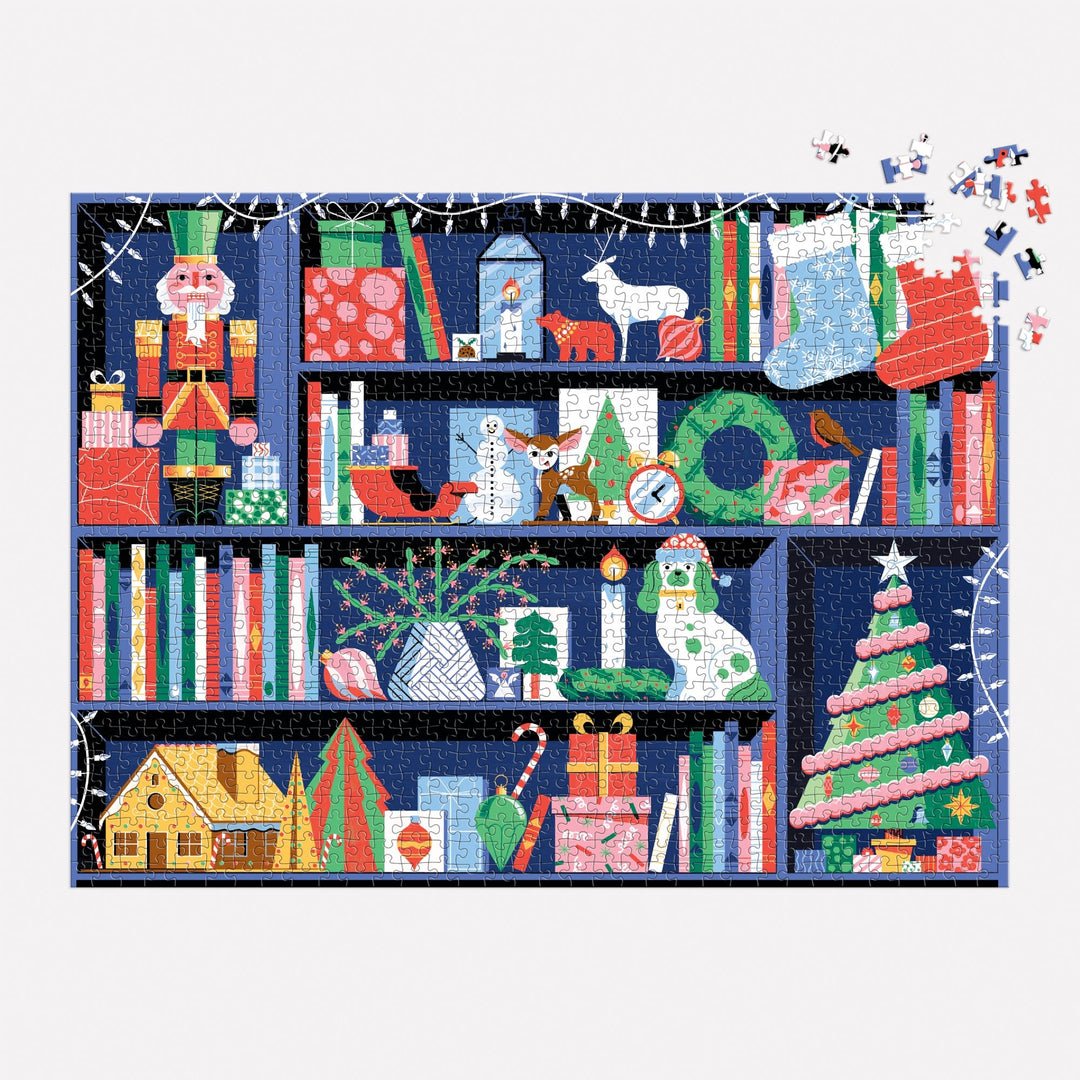
Shadow boxes create museum-quality presentations by adding depth to your puzzle display. Select a shadow box with internal dimensions matching your puzzle plus approximately one-quarter inch clearance on all sides. Depth should accommodate your puzzle’s thickness after mounting—typically 1.5-4 inches.
Mount your puzzle to rigid backing using your preferred adhesive method. Cut foam core to fit snugly inside the shadow box frame, slightly smaller than internal dimensions. Apply spray adhesive to the backing, position your puzzle carefully, and smooth from center outward. Allow complete drying before handling.
Place the mounted puzzle face-down on the backing board inside the shadow box, securing with small pieces of mounting tape. Close the frame according to instructions, ensuring the front glass sits evenly. Attach proper hanging hardware before mounting on your wall.
Custom Framing Options for Long-Term Preservation

Professional framing offers the highest level of protection and visual appeal. Choose conservation-grade materials if long-term preservation matters—standard framing materials contain acids that cause yellowing over time. Conservation framing employs acid-free backing and UV-protective glazing that protects your puzzle for decades.
Matting dramatically improves presentation by creating visual breathing room between puzzle and frame. A single complementary color or double mat with contrasting layers adds sophistication. The mat also prevents puzzle edges from touching frame glass, which can cause condensation damage.
Frame shops offer puzzle-specific services including dry mounting, linen tape backing for edge reinforcement, and UV-protective glazing. Discuss your goals with the framer—many shops offer package deals that include frame, mat, and mounting services at competitive prices.
DIY Frame Solutions for Budget-Friendly Display
Creating your own frame saves money while allowing customization. Measure your puzzle precisely and search for frames with matching internal dimensions. IKEA and online retailers like American Frame offer affordable options.
Mount your puzzle to foam core or hardboard backing using spray adhesive for large puzzles or brush-on glue for smaller pieces. Cut backing material one-eighth inch smaller than the frame’s internal dimensions. Place puzzle face-down on backing, apply adhesive, smooth thoroughly, and allow complete drying.
Insert your mounted puzzle into the frame face-down on a protected surface. Secure with the frame’s built-in clips or hanging hardware. If your frame lacks hanging hardware, install D-rings or wire systems before display.
Hanging Systems for Direct Wall Mounting
Several hanging systems allow direct wall display of glued puzzles. Picture hanging strips offer damage-free mounting for lightweight puzzles—select strips rated for at least double your puzzle’s weight. Clean the wall with isopropyl alcohol before application.
French cleat systems provide secure hanging for heavier puzzles. This method uses two interlocking angled boards—one attached to the wall and one to the puzzle back. French cleats work exceptionally well for large mounted puzzles that might sag with simpler systems.
Mounting putty offers flexible temporary solutions, especially for renters. Quality putty holds lightweight puzzles securely while removing cleanly from most surfaces. Change the putty periodically, as it can lose adhesion over time.
Common Mounting Mistakes to Avoid
Applying glue to an incomplete puzzle permanently captures every flaw. Double-check every connection and examine for raised corners before applying adhesive. Rushing the drying process compromises bond strength—wait 48-72 hours before framing or hanging.
Using household white glue causes warping as it remains flexible, while super glue creates brittle bonds that crack. Purchase puzzle-specific adhesive designed for paper and cardboard applications.
Mounting without backing support leads to sagging and eventual damage. Even framed puzzles benefit from rigid backing that distributes weight evenly. Cut foam core to support your puzzle’s full dimensions with slight extension beyond edges.
Creative Display Ideas Beyond Traditional Framing
Grid displays create impact with multiple puzzles shown together. Hang several completed puzzles of similar size in a grid pattern with consistent spacing. This approach works beautifully for puzzle series or travel destination collections.
Backlit displays illuminate puzzles from behind using LED light panels designed for art display. This creates dramatic visual impact, especially for puzzles with dark areas or those displayed in dim spaces.
Floating shelves provide flexible display that allows easy rotation. Mount completed puzzles on narrow shelves using small adhesive dots, arranging them in clusters or along multiple shelves for changing displays.
Tabletop easels transform mounted puzzles into free-standing displays for mantels or shelves. Wooden easels hold framed or unframed mounted puzzles at viewing angles, adding dimension to your display.
Mounting your completed puzzle transforms temporary entertainment into permanent art that celebrates your achievement. Whether you choose simple adhesive mounting or elegant custom framing, proper technique ensures your puzzle remains intact and beautiful for years of enjoyment. Take time to select the method that fits your needs, follow the steps carefully, and your mounted puzzle will reward you with lasting satisfaction every time you see it on your wall.