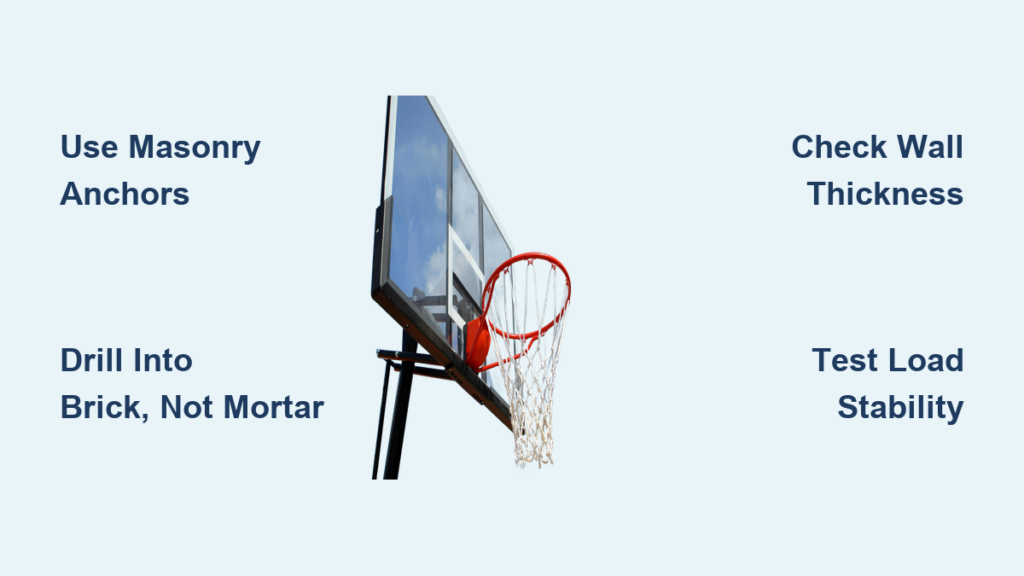
Mounting a basketball hoop on a brick wall requires careful planning and proper technique to ensure safety and structural integrity. Many homeowners attempt this DIY project without understanding the specific challenges brick surfaces present, leading to damaged walls, unstable hoops, or even serious injuries when equipment fails. With the right approach, you can securely install a basketball hoop that withstands regular use while preserving your brick wall’s integrity. This guide outlines critical considerations for mounting basketball hoops on brick surfaces, helping you avoid common pitfalls and create a durable installation that provides years of enjoyment.
Why Brick Wall Mounting Requires Special Considerations
Brick walls present unique challenges compared to wood or concrete surfaces when mounting heavy equipment like basketball hoops. Unlike solid concrete, brick is a composite material with varying density between the brick units and mortar joints. The hollow cores in many modern bricks and the natural porosity of older bricks affect how anchors hold. Standard mounting techniques used for other surfaces often fail on brick, leading to pulled anchors or crumbling mortar. Understanding these material properties prevents costly mistakes and ensures your basketball hoop remains securely mounted through seasons of play.
How Brick Composition Affects Mounting Stability
Brick walls consist of individual bricks separated by mortar joints, creating inconsistent density throughout the surface. When mounting a basketball hoop, you must consider:
- Brick type: Solid clay bricks provide better hold than hollow concrete blocks
- Mortar condition: Crumbling or deteriorated mortar won’t support anchors
- Wall thickness: Single-wythe walls require different mounting than double-wythe construction
- Hollow cores: Many bricks have internal cavities that compromise anchor grip
Professional installers recommend mounting into the brick itself rather than the mortar joints whenever possible, as mortar typically has only one-third the strength of quality brick. This requires precise drilling and appropriate anchors designed specifically for masonry applications.
Selecting the Right Mounting Hardware for Brick Surfaces

Choosing appropriate hardware is critical for brick wall installations. Standard plastic anchors or toggle bolts designed for drywall will fail under the stress of a basketball hoop. The constant vibration and impact forces from gameplay create unique challenges that require specialized mounting solutions.
Essential Hardware Components for Brick Installation
For secure mounting on brick surfaces, you’ll need:
- Masonry drill bits specifically designed for brick (carbide-tipped)
- Sleeve anchors or wedge anchors rated for masonry applications
- Stainless steel mounting bolts (minimum 1/2-inch diameter)
- Heavy-duty mounting plate with sufficient surface area
- Silicone sealant to prevent water intrusion
The anchor size must match both the drill bit and the mounting bracket holes precisely. Oversized holes in brick cannot be effectively repaired, while undersized holes prevent proper anchor expansion. Always consult your basketball hoop manufacturer’s specifications for minimum anchor requirements before purchasing hardware.
Step-by-Step Mounting Procedure for Brick Walls
Installing a basketball hoop on brick requires careful preparation and execution. Rushing through this process often leads to failed installations that require costly repairs. Take time to verify each step before proceeding to ensure a secure, long-lasting mount.
Pre-Installation Assessment and Planning
Before drilling a single hole, complete these critical assessment steps:
- Inspect brick condition – Tap bricks with a screwdriver handle; hollow sounds indicate potential damage
- Check for internal structures – Use a stud finder with AC detection to avoid wiring or pipes
- Verify wall thickness – Measure from exterior to interior to determine anchor length needs
- Mark precise mounting points – Use a level and measure twice to ensure perfect alignment
- Confirm local building codes – Some municipalities require permits for exterior structural modifications
This assessment phase typically takes 20-30 minutes but prevents hours of remediation work if problems arise during installation. Pay special attention to mortar condition – crumbling joints may require professional tuckpointing before proceeding.
Proper Drilling Technique for Brick Surfaces
Drilling into brick requires specific techniques to avoid cracking or damaging the surface:
- Start with a small pilot hole (1/8-inch) before enlarging to final size
- Use steady, moderate pressure – Let the drill bit do the work without forcing
- Maintain perpendicular angle to prevent bit wandering
- Clear dust regularly by withdrawing the bit every inch
- Verify depth with a depth gauge before inserting anchors
Drilling through brick typically takes 3-5 minutes per hole with proper technique. Rushing causes overheating and potential brick damage. If you encounter unusually hard spots, you may be hitting mortar – stop and reposition to avoid compromising the anchor’s holding power.
Critical Safety Considerations for Brick Wall Mounts

Safety must be your top priority when mounting basketball equipment. A failed mount can cause serious injury to players and bystanders. The dynamic forces generated during gameplay – especially when hanging on the rim – create stresses far exceeding the static weight of the hoop assembly.
Weight Distribution and Structural Integrity Checks
Before finalizing your installation, verify these critical safety factors:
- Load testing – Apply gradual pressure up to 200% of expected maximum force
- Wall deflection – Check for any movement in the wall structure behind the mounting point
- Anchor pull-out resistance – Confirm anchors meet minimum 200-pound pull-out rating
- Corrosion protection – Ensure all metal components have appropriate weather resistance
Many failed installations result from underestimating the dynamic forces involved. When a player hangs on the rim, the mounting points experience forces up to five times the player’s weight due to leverage effects. Professional installations typically use redundant mounting points and distribute load across multiple bricks for maximum safety.
Common Installation Mistakes to Avoid
Even experienced DIYers make critical errors when mounting basketball hoops on brick surfaces. These mistakes often aren’t apparent until the equipment fails under stress, potentially causing injury or property damage.
Why Mortar Joints Shouldn’t Bear the Load
One of the most frequent errors is drilling into mortar joints instead of solid brick. While mortar appears solid, it has significantly less compressive strength than quality brick. Over time, the constant stress causes mortar to crumble, leading to anchor failure. Always target the center of bricks whenever possible, avoiding the outer 1-inch perimeter where brick is most prone to chipping.
The Danger of Improper Hole Cleaning
Failing to thoroughly clean drill holes before inserting anchors compromises holding power by up to 70%. Brick dust acts as a lubricant that prevents proper anchor expansion. Use a wire brush followed by compressed air (or a dedicated hole-cleaning tool) to ensure holes are completely free of debris before installing anchors.
Maintenance Requirements for Brick-Mounted Hoops
Unlike ground-mounted systems, wall-mounted basketball hoops require specific maintenance to ensure long-term safety. Environmental factors like weather exposure and seasonal temperature changes affect both the mounting hardware and brick surface.
Seasonal Inspection Protocol
Conduct these checks every spring before regular use begins:
- Anchor tightness – Verify all mounting bolts remain secure
- Sealant condition – Reapply silicone around mounting points if cracked
- Brick integrity – Check for new cracks or spalling around installation
- Rust prevention – Treat any corrosion on metal components immediately
Pay special attention to the area where the mounting plate contacts the brick. Water intrusion behind the plate can cause freeze-thaw damage in colder climates, leading to brick deterioration that compromises the entire installation.
When to Call a Professional Installer
While many homeowners successfully complete this project themselves, certain situations warrant professional assistance. If your assessment reveals any of these conditions, consult a qualified installer:
- Historic brick construction with soft, older bricks
- Significant mortar deterioration requiring repair
- Multi-story installations above ground level
- Local building codes requiring professional certification
- Uncertainty about wall composition or structural capacity
Professional installers have specialized tools and experience that prevent costly mistakes. Their expertise often saves money in the long run by avoiding failed installations that require remediation.
Final Note: Properly mounting a basketball hoop on brick requires understanding the unique properties of masonry surfaces, selecting appropriate hardware, and following precise installation techniques. By carefully assessing your wall condition, using the right tools and anchors, and conducting regular maintenance, you can create a safe, durable installation that provides years of enjoyment. Always prioritize safety over convenience – when in doubt about any aspect of the installation process, consult a professional with masonry mounting experience. The small investment in proper installation protects both your property and the people who will use your basketball hoop.