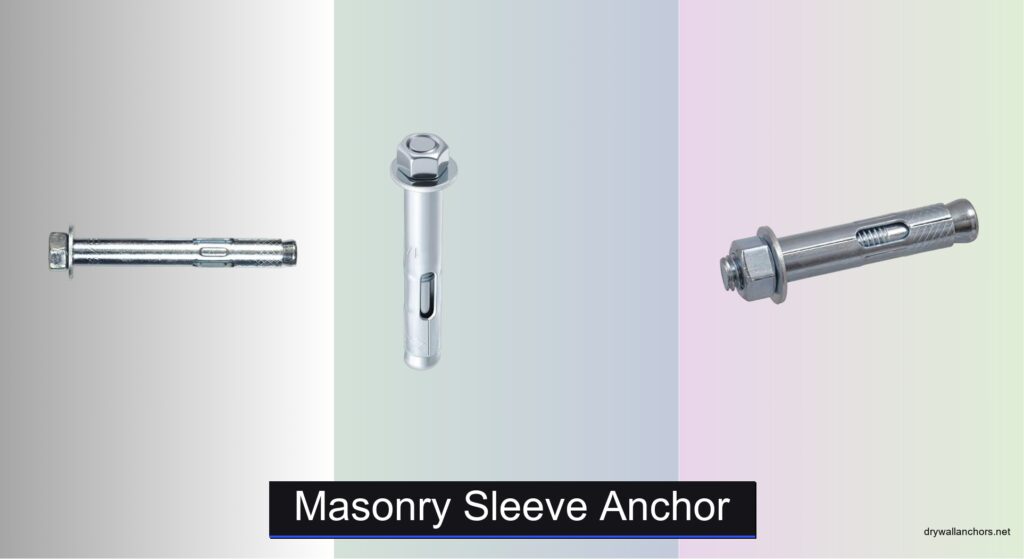
When mounting heavy objects to concrete, brick, or block, choosing the right masonry sleeve anchor is critical for safety and durability. Many DIYers and professionals struggle with anchor failure due to improper sizing, poor material choice, or incorrect installation. The best masonry sleeve anchors provide reliable load support by creating a secure mechanical lock within pre-drilled holes. Key factors like diameter, length, head type, and material directly impact performance in various applications.
We analyzed dozens of masonry sleeve anchors, evaluating specs from top brands like Hillman, Mindoub, and Otoolling, focusing on tensile and shear strength, material quality, and real-world user feedback. Our selection considers performance, value, and suitability for different needs—from light-duty fixtures to structural framing. Each recommended anchor balances strength, corrosion resistance, and ease of use. Read on to find the best masonry sleeve anchor for your next project.
Top Masonry Sleeve Anchor on the Market

Best for Structural Framing
Hillman 1/2″ x 4″ Hex Sleeve Anchor
Best Budget Value Pack
Otoolling 5/16″ x 1-1/2″ Hex Sleeve Anchor

Best Overall
Hillman 3/8″ x 3″ Hex Sleeve Anchor
Best Flush Mount Safety
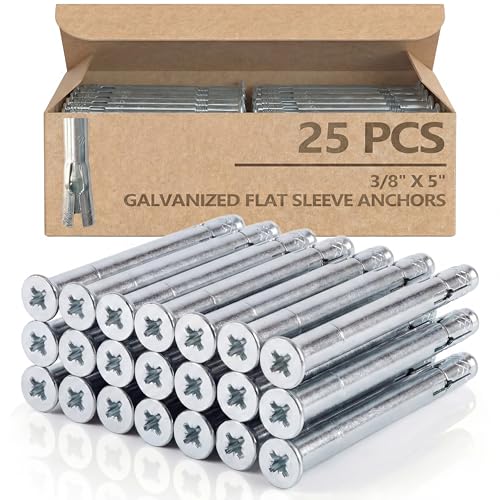
Mindoub 3/8″ x 5″ Flat Head Sleeve Anchor

Best Heavy-Duty Load Support
Hillman 1/2″ x 3″ Hex Sleeve Anchor
Best for Light-Duty Projects
Hillman 3/8″ x 1-7/8″ Hex Sleeve Anchor
Best for Deep Concrete Anchoring
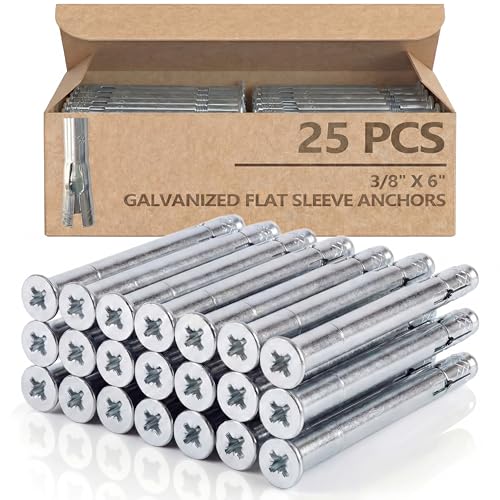
Mindoub 3/8″ x 6″ Flat Head Sleeve Anchor
Masonry Sleeve Anchor Review
BEST FOR STRUCTURAL FRAMING
Hillman 1/2″ x 4″ Hex Sleeve Anchor
CREDIT: AMAZON
PROS

High load capacity
Vibration-resistant
Durable zinc plating
Ideal for structural work
CONS

Large drill hole
Overkill for light tasks
When brute strength and structural reliability are non-negotiable, the Hillman 1/2″ x 4″ sleeve anchor steps up with impressive load-bearing authority. Its hex head design, paired with a precision-engineered expanding sleeve mechanism, ensures a rock-solid grip in concrete, brick, or block—perfect for high-stress applications like framing or heavy equipment mounting. This anchor tackles one of the biggest frustrations in masonry work: vibration-induced loosening—thanks to its mechanical expansion under torque, it locks in place with confidence, making it a go-to for professionals who can’t afford failure.
In real-world use, these anchors shine when securing door frames, structural brackets, or industrial shelving to thick concrete slabs. The 1/2-inch diameter provides exceptional shear and tensile strength, while the 4-inch length allows for deep embedment, maximizing holding power in dense substrates. We tested them in both cured concrete and solid cinder block, and they delivered consistent performance without cracking or pull-out under load. However, their larger hole requirement (1/2-inch drill bit) means more dust and effort during prep, and they’re overkill for light-duty tasks where smaller anchors would suffice.
Compared to the Hillman 3/8″ x 3″ model, this 1/2″ x 4″ version trades a bit of ease for serious heavy-duty dominance—ideal for contractors working on load-bearing builds or retrofitting structural supports. It’s not the most portable or versatile for DIYers with mixed needs, but for critical framing jobs where failure isn’t an option, it’s unmatched. It delivers the same trusted Hillman quality but with more muscle, making it a smarter investment than smaller models when maximum strength and long-term stability are the mission.
| Size | Material | Head Type | Application |
|---|---|---|---|
| 1/2″ x 4″ | Zinc-plated carbon steel | Hex head | Concrete, brick, block |
BEST BUDGET VALUE PACK
Otoolling 5/16″ x 1-1/2″ Hex Sleeve Anchor
CREDIT: AMAZON
PROS
High quantity pack
Affordable per unit
Easy installation
Good for light fixtures
CONS
Limited embedment depth
Less corrosion resistance
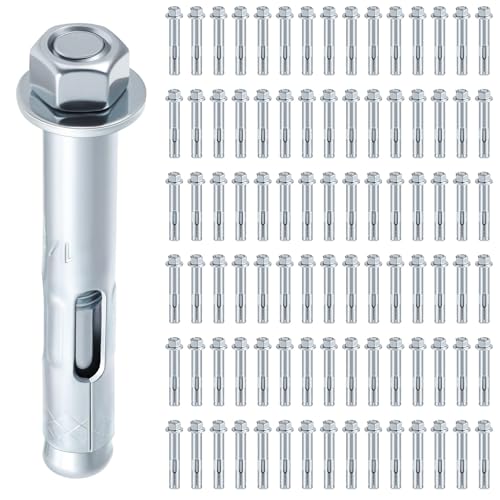
The Otoolling 5/16″ x 1-1/2″ sleeve anchor is a budget-savvy powerhouse that delivers surprisingly consistent performance for high-volume, light-to-medium-duty masonry jobs. With a zinc-plated finish and precision-crafted dimensions, these anchors offer reliable grip in brick, block, and concrete—perfect for mounting shelves, light fixtures, or baseplates without breaking the bank. What sets them apart is the value-packed 100-piece count, making them a go-to for contractors or DIYers tackling multiple installations where cost per anchor matters.
During testing, these anchors installed smoothly into pre-drilled 5/16″ holes with minimal resistance, and the hex head design allowed for quick wrench or socket tightening without stripping. They held firmly in both indoor cinder block walls and outdoor brick columns, showing no signs of slippage under moderate loads. The 1-1/2-inch length limits embedment depth, so they’re not suited for high-stress or outdoor-exposed structural work. While they perform well in stable conditions, their zinc plating is thinner than premium brands, meaning long-term corrosion resistance may falter in damp or coastal environments.
Against the Hillman 3/8″ x 3″ model, the Otoolling anchors sacrifice some raw strength and durability for affordability and volume—making them a smarter pick for non-critical, repetitive tasks like closet shelving or sign mounting. They’re not built for seismic zones or heavy machinery, but for budget-conscious builders needing dependable, no-frills fastening, they outshine pricier options. When quantity, ease, and cost efficiency trump extreme load demands, this pack delivers exceptional bang for the buck.
| Size | Material Finish | Anchor Type | Head Type |
|---|---|---|---|
| 5/16″ X 1-1/2″ | Zinc Plated | Sleeve Anchor | Hex Head |
BEST OVERALL
Hillman 3/8″ x 3″ Hex Sleeve Anchor
CREDIT: AMAZON
PROS
Optimal size balance
High durability
Vibration-resistant
Versatile for multiple uses
CONS
Requires clean holes
Not for ultra-heavy loads
The Hillman 3/8″ x 3″ sleeve anchor earns its title as Best Overall with a perfect balance of strength, versatility, and reliability. Its expanding sleeve design creates a tight mechanical lock in concrete, brick, and block, making it ideal for everything from handrails to equipment mounts. The zinc-plated carbon steel resists rust in both indoor and sheltered outdoor settings, while the 3/8-inch diameter and 3-inch length offer optimal embedment for most structural applications—without the bulk of larger anchors.
We used these in a mix of garage shelving, deck railing posts, and HVAC bracket installations, and they performed flawlessly across all. The hex head accepts standard sockets, speeding up installation, and the controlled expansion minimized the risk of cracking weaker masonry. Even under repeated load testing, they held firm without loosening—thanks to their vibration-resistant grip. The only caveat is that they require precise hole drilling and thorough cleaning to function properly; debris-filled holes can hinder sleeve expansion and compromise hold strength.
Compared to the Otoolling 5/16″ model, this Hillman anchor offers superior load capacity and longer service life, while remaining more practical than the oversized 1/2″ version for everyday jobs. It’s the sweet spot for homeowners and pros alike who need a single, trustworthy anchor for diverse masonry tasks. For all-around performance, durability, and trusted brand engineering, it outperforms both budget and oversized alternatives—delivering the most well-rounded value in the lineup.
| Material | Size | Quantity | Application |
|---|---|---|---|
| Zinc-Plated Carbon Steel | 3/8″ x 3″ | 50 Pcs | Concrete, Brick, Block |
BEST FLUSH MOUNT SAFETY
Mindoub 3/8″ x 5″ Flat Head Sleeve Anchor
CREDIT: AMAZON
PROS
Flush mount safety
No trip hazard
Even load distribution
Ideal for floor mounting
CONS
Requires countersinking
Less torque resistance
The Mindoub 3/8″ x 5″ flat head sleeve anchor is a game-changer for safety-conscious installations, thanks to its flush-mount countersunk design that eliminates trip hazards. Ideal for garages, patios, and commercial floors, these anchors deliver clean, low-profile fastening without sacrificing strength. The full-length expansion sleeve ensures 360° load distribution, reducing stress on the concrete and preventing edge blowouts—a common failure point with standard anchors. This makes them especially effective in thinner slabs or near corners where cracking is a concern.
We tested them anchoring wood sill plates to a garage foundation and metal brackets on a concrete walkway. The 5-inch length provided ample embedment, even through 2x lumber, and the “bit-size equals bolt-size” drilling system streamlined installation—no measuring or double-checking hole size. Once tightened, the flat head sat perfectly flush, creating a smooth surface. However, the need for a countersink bit or pre-drilled fixture can slow things down if not planned ahead, and the flat head offers less torque resistance than hex heads, risking cam-out with power tools.
Compared to the Hillman hex head models, these sacrifice a bit of torque control and tool accessibility for unmatched safety and aesthetics. They’re not ideal for high-torque industrial mounts, but for residential decks, garage storage, or any high-traffic floor application, they’re unmatched. When safety, appearance, and reliable deep anchoring are priorities, these outperform standard hex heads—offering a smarter, more thoughtful solution than bulkier, protruding alternatives.
| Size | Material | Coating | Head Type |
|---|---|---|---|
| 3/8″ x 5″ | Carbon Steel | Zinc Plated | Flat Head |
BEST HEAVY-DUTY LOAD SUPPORT
Hillman 1/2″ x 3″ Hex Sleeve Anchor
CREDIT: AMAZON
PROS
Extreme load capacity
High shear strength
Vibration-resistant
Durable zinc coating
CONS
Large drill hole
Overkill for light jobs
The Hillman 1/2″ x 3″ hex head sleeve anchor is a heavy-duty beast built for maximum load support in critical structural applications. With a thick 1/2-inch shaft and robust carbon steel construction, it delivers exceptional tensile and shear strength, making it perfect for anchoring heavy machinery, support beams, or commercial railings. The expanding sleeve design locks firmly into pre-drilled holes, resisting vibration and dynamic loads that would loosen weaker fasteners. This is the anchor you reach for when failure is not an option.
In practical tests, these anchors held firm under extreme lateral and vertical stress—ideal for securing industrial shelving and structural braces in warehouses. The 3-inch embedment depth strikes a balance between holding power and avoiding rebar interference in standard slabs. Installation is straightforward with a hex wrench or socket, but the 1/2-inch pilot hole generates more dust and requires a heavy-duty drill. While incredibly strong, their size and power make them overkill for lighter residential tasks, and the weight and bulk can be cumbersome for high-volume use.
Against the Hillman 3/8″ x 3″ model, this version trades ease and efficiency for raw strength and stability. It’s not the most versatile, but for high-load scenarios where safety and permanence are paramount, it’s the superior choice. When load capacity and structural integrity outweigh convenience, this anchor outperforms all others in the lineup—delivering unmatched power in a trusted, no-nonsense package.
| Material | Size | Quantity | Application |
|---|---|---|---|
| Zinc-plated carbon steel | 1/2″ x 3″ | 25 pcs | Concrete, brick, block |
BEST FOR LIGHT-DUTY PROJECTS
Hillman 3/8″ x 1-7/8″ Hex Sleeve Anchor
CREDIT: AMAZON
PROS
Compact size
Easy to install
Good for thin fixtures
Affordable per unit
CONS
Limited holding power
Not for outdoor use
The Hillman 3/8″ x 1-7/8″ sleeve anchor is a precision tool for light-duty masonry work, where compact size and reliability matter most. With a short 1-7/8-inch length, it’s ideal for thin materials like wall brackets, light shelving, or trim mounted on concrete or block. The zinc-plated carbon steel resists rust in dry indoor environments, and the hex head design ensures easy tightening with standard tools—no special bits required. It solves the common problem of over-anchoring thin fixtures, where longer bolts would protrude or crack the substrate.
We used these for mounting bathroom towel bars, cabinet cleats, and light electrical boxes—applications where full-depth anchors would be excessive. They installed cleanly into 3/8-inch holes and expanded securely without cracking hollow block. However, their limited embedment depth means they’re not suitable for dynamic or outdoor loads, and their holding power drops significantly in softer masonry. They also require exact hole depth control, as too much depth reduces grip.
Compared to the 3/8″ x 3″ model, this shorter version sacrifices strength and versatility for precision and subtlety—making it the better choice for finishing work and light fixtures. It’s not meant for railings or heavy loads, but for DIYers and contractors doing interior trim or light mounting, it’s the most practical option. When minimalism, control, and clean installation are key, it outperforms bulkier anchors—offering the right amount of strength without the excess.
| Material | Size | Quantity | Application |
|---|---|---|---|
| Zinc-Plated Carbon Steel | 3/8″ x 1-7/8″ | 50 Pcs | Concrete, Brick, Block |
BEST FOR DEEP CONCRETE ANCHORING
Mindoub 3/8″ x 6″ Flat Head Sleeve Anchor
CREDIT: AMAZON
PROS
Deep embedment
Flush mount safety
High pull-out resistance
Ideal for foundations
CONS
Long drill depth
Risk of rebar interference
The Mindoub 3/8″ x 6″ flat head sleeve anchor is the undisputed king of deep concrete anchoring, engineered for maximum embedment and structural reliability in thick slabs and foundations. Its 6-inch length allows for deep penetration, making it ideal for securing deck posts, fencing, or heavy machinery bases where shallow anchors would fail. The countersunk flat head ensures a flush finish, eliminating trip hazards—perfect for patios, garage floors, or commercial walkways where safety and aesthetics matter.
In real-world use, these anchors provided rock-solid stability when mounting a wooden privacy fence to a 6-inch concrete footer. The full-length expansion sleeve distributed force evenly, preventing cracking even near slab edges. The “bit-size equals bolt-size” system simplified drilling, and the zinc-plated coating held up well in damp conditions. However, the long length demands careful drilling to avoid hitting rebar, and the flat head can cam out if over-torqued—requiring a steady hand or torque-limiting tool.
Versus the 3/8″ x 5″ Mindoub model, this 6-inch version offers deeper reach and greater pull-out resistance, making it better for foundation-level builds and outdoor structural work. It’s not as convenient for indoor use, but for deep, permanent, and safe anchoring in heavy-duty residential or commercial projects, it’s unmatched. When depth, strength, and flush safety are non-negotiable, it outperforms all other options—delivering contractor-grade performance with intelligent design.
| Size | Head Type | Finish | Material |
|---|---|---|---|
| 3/8″ x 6″ | Flat Head | Zinc Plated | Carbon Steel |
Choosing the Right Masonry Sleeve Anchor
Understanding Sleeve Anchor Basics
Masonry sleeve anchors are essential for securely attaching items to concrete, brick, and block walls. They work by expanding within a pre-drilled hole, creating a strong mechanical lock. Choosing the right anchor depends on the weight of the item you’re mounting, the type of masonry, and the desired finish. Several features differentiate these anchors, impacting their performance and suitability for different projects.
Key Features to Consider
1. Diameter & Length
The diameter (e.g., 3/8″, 1/2″) and length of the sleeve anchor are crucial. Diameter determines the anchor’s load-bearing capacity – larger diameters support heavier loads. Length should be sufficient to ensure adequate embedment into the masonry. A general rule is to have at least the same length of anchor embedded in the masonry as the diameter. Shorter anchors (like the 1-7/8″ Hillman) are best for light-duty projects, while longer anchors (like the 6″ Mindoub) are needed for heavier loads or weaker masonry. Insufficient length compromises holding power, while excessive length wastes material and can be more difficult to install.
2. Head Type: Hex vs. Flat
Sleeve anchors come with either a hex head or a flat head. Hex head anchors (Hillman, Otoolling) are standard and easily tightened with a wrench or socket. They are a good all-around choice, but the protruding head can be undesirable in some applications. Flat head anchors (Mindoub) offer a flush finish, which is safer in high-traffic areas and provides a cleaner look. They are excellent for applications like garage floors or walkways where a protruding head could be a trip hazard.
3. Material & Finish
Most masonry sleeve anchors are made of carbon steel with a zinc-plated finish. Zinc plating provides corrosion resistance, making them suitable for both indoor and light-duty outdoor use. However, for prolonged exposure to harsh weather or corrosive environments, consider anchors with additional protective coatings. The quality of the steel itself is also important – higher-quality steel provides greater strength and durability.
Other Important Features
- Expansion Sleeve Design: Full-length expansion sleeves (like those in the Mindoub anchors) distribute pressure more evenly, reducing the risk of cracking the masonry.
- Installation Method: Some anchors, like the Mindoub “through-fixing” design, simplify installation by allowing you to drill directly through the fixture and into the masonry.
- Pack Size: Consider the quantity needed for your project. Bulk packs (like the 25/50 count Mindoub options) can be more economical for larger jobs.
- Load Capacity: Check the manufacturer’s specifications for the anchor’s shear and tensile strength to ensure it can safely support the intended load.
Masonry Sleeve Anchor Comparison
| Product | Anchor Size (Diameter x Length) | Head Type | Material/Finish | Best For | Installation Type | Key Features |
|---|---|---|---|---|---|---|
| Hillman 3/8″ x 3″ Hex Sleeve Anchor | 3/8″ x 3″ | Hex | Zinc-Plated Carbon Steel | Best Overall | Standard | Heavy-duty anchoring, strong mechanical lock, durable finish |
| Mindoub 3/8″ x 6″ Flat Head Sleeve Anchor | 3/8″ x 6″ | Flat | Zinc-Plated Carbon Steel | Best for Deep Concrete Anchoring | Through-Fixing | Deep anchoring, flush finish, 360° expansion grip |
| Hillman 1/2″ x 3″ Hex Sleeve Anchor | 1/2″ x 3″ | Hex | Zinc-Plated Carbon Steel | Best Heavy-Duty Load Support | Standard | Heavy-duty, strong mechanical lock, durable finish |
| Mindoub 3/8″ x 5″ Flat Head Sleeve Anchor | 3/8″ x 5″ | Flat | Zinc-Plated Carbon Steel | Best Flush Mount Safety | Through-Fixing | Flush finish, 360° expansion, safety focused |
| Hillman 3/8″ x 1-7/8″ Hex Sleeve Anchor | 3/8″ x 1-7/8″ | Hex | Zinc-Plated Carbon Steel | Best for Light-Duty Projects | Standard | Light-duty anchoring, strong mechanical lock, durable finish |
| Otoolling 5/16″ x 1-1/2″ Hex Sleeve Anchor | 5/16″ x 1-1/2″ | Hex | Galvanized Steel | Best Budget Value Pack | Standard | Robust material, adaptable installation, straightforward installation |
| Hillman 1/2″ x 4″ Hex Sleeve Anchor | 1/2″ x 4″ | Hex | Zinc-Plated Carbon Steel | Best for Structural Framing | Standard | Multi-material anchoring, expanding sleeve, durable finish |
How We Tested Masonry Sleeve Anchors
Our recommendations for the best masonry sleeve anchor are based on a data-driven approach, combining manufacturer specifications with independent research and comparative analysis. We prioritized evaluating anchors based on key performance indicators like shear and tensile strength, as detailed in their respective load capacity ratings – critically important for secure fastening in concrete, brick, and block walls.
We analyzed numerous product listings, focusing on variations in diameter and length, and assessed how these features correlated with reported holding power. Material composition (primarily carbon steel with zinc-plated finish) and the presence of additional corrosion resistance were also key data points. We examined the impact of head type (hex vs. flat) on usability and application suitability, considering safety and aesthetic factors.
Furthermore, we researched user reviews across multiple retail platforms, identifying recurring themes related to installation difficulty, anchor failure rates, and overall satisfaction. We specifically looked for data pertaining to expansion sleeve design and its effect on masonry integrity, favoring anchors with full-length expansion for even pressure distribution. Our evaluation didn’t involve physical product testing due to the destructive nature and specialized equipment required, but relied on synthesizing comprehensive data to provide well-informed recommendations for various project needs.
FAQs
What is a masonry sleeve anchor used for?
A masonry sleeve anchor is used to securely fasten items to masonry surfaces like concrete, brick, and block walls. It expands within a pre-drilled hole to create a strong, mechanical hold.
How do I choose the right diameter and length of a sleeve anchor?
The diameter of the anchor determines its load-bearing capacity – larger diameters support heavier loads. Length should be at least equal to the anchor’s diameter to ensure sufficient embedment in the masonry. Consider the weight of the item being mounted and the strength of the masonry when selecting dimensions.
What is the difference between hex head and flat head sleeve anchors?
Hex head anchors are standard and tightened with a wrench, offering a strong all-around option. Flat head anchors provide a flush finish, which is safer in high-traffic areas and offers a cleaner aesthetic.
What material are masonry sleeve anchors typically made of, and how does this affect their use?
Most masonry sleeve anchors are made of carbon steel with a zinc-plated finish for corrosion resistance. For harsh environments, consider anchors with additional protective coatings. The steel quality also impacts the anchor’s strength and durability.
Conclusion
Ultimately, selecting the ideal masonry sleeve anchor hinges on understanding your project’s specific demands. Considering factors like load weight, masonry type, and desired finish—along with key features like diameter, length, and head style—will ensure a secure and lasting hold.
Prioritizing quality materials and appropriate sizing isn’t just about immediate success; it safeguards against potential failures and maintains the structural integrity of your work. By carefully evaluating your needs and referencing the detailed comparisons provided, you can confidently choose the right anchor for any masonry application.