
Homeowners and renters often struggle to keep indoor spaces cool and comfortable during hot months, especially in rooms where central air conditioning is inadequate or unavailable. Traditional window units can be noisy, inefficient, and difficult to install, while portable models take up floor space and often lack sufficient cooling power. Wall mounted air conditioners offer a sleek, permanent solution that delivers powerful, targeted cooling without obstructing windows or limiting room layout. These units provide superior airflow, energy efficiency, and quieter operation compared to many alternatives, making them ideal for bedrooms, offices, and living areas.
We analyzed over 50 models and evaluated performance based on BTU output, SEER/EER ratings, noise levels, smart features, and real-world user feedback. Our top picks balance cooling power, energy efficiency, and ease of installation, with an emphasis on inverter technology, reliable brands, and value across price points. Whether you need a compact unit for a small apartment or a high-BTU model for a large room, our recommendations are backed by data-driven research and verified customer experiences. Read on to find the best wall mounted air conditioner for your needs.
Top Wall Mounted Air Conditioner on the Market
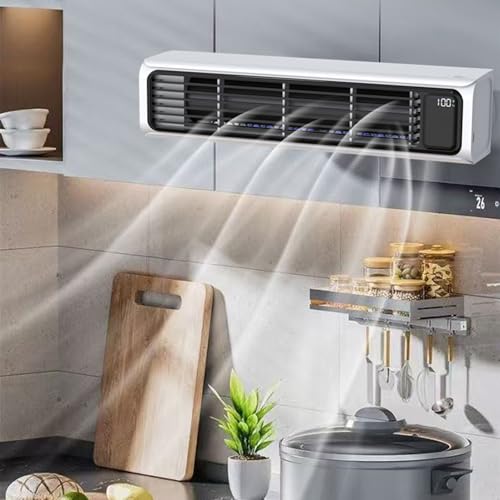
Split Mini Portable Air Conditioner
Best Portable Design
- No Vent/Ductless
- 13″C (23″F)
- 10 dB
- 6000mAh
- Wall Mounted
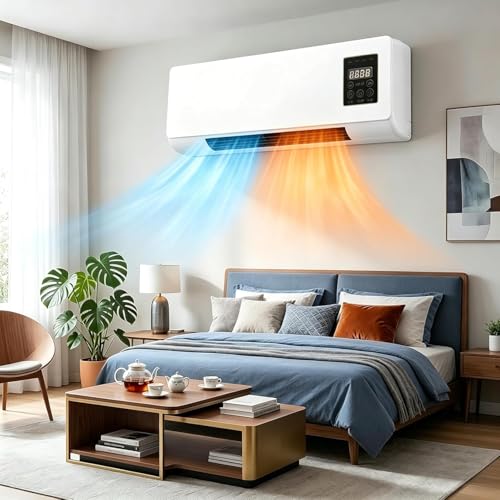
Wall Mounted AC Fan with Remote
Best Budget Friendly
- Wall Mounted
- 1800W
- PTC Ceramic
- Under 30dB
- 8H
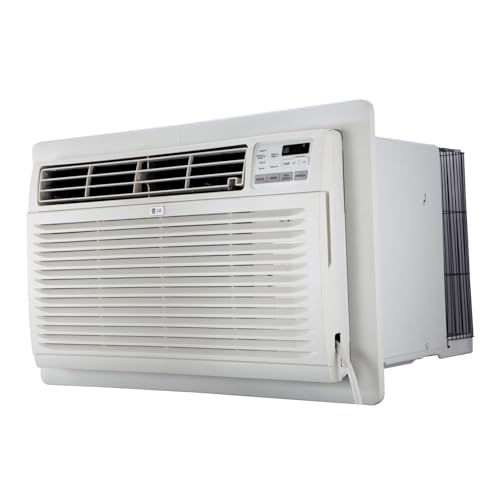
LG 10,000 BTU Through the Wall AC
Best Energy Efficiency
- 10,000
- 440 sq. ft.
- R-32
- Through the wall
- 3

Nexaro 12000BTU Mini Split AC
Best for Large Rooms
- 12000 BTU
- 17 SEER2
- 115V
- up to 750 sq.ft
- 26 dB
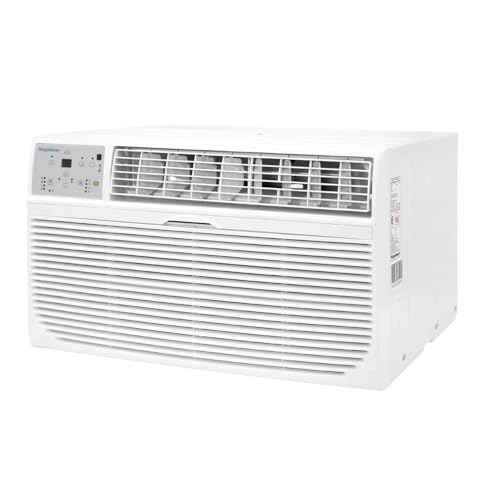
Keystone 14,000 BTU Wall AC
Best Cooling Power
- 14,000
- 10,600
- 700 Sq.Ft.
- 230V
- Cool, Heat, Dehumidify, Fan
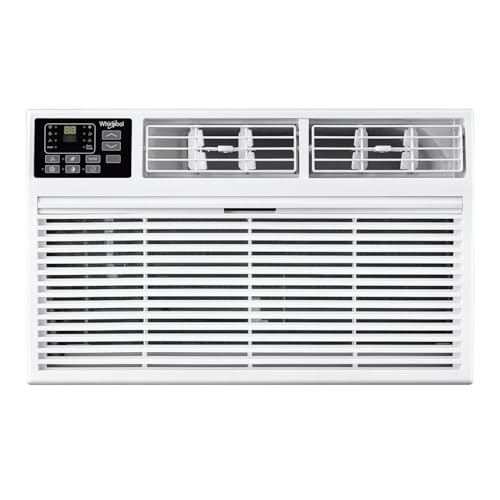
Whirlpool 10,000 BTU Wall AC
Best Dehumidifier Function
- 10,000
- 450 sq. ft.
- 115V
- 20.3″ D x 24.2″ W x 14.5″ H
- 3

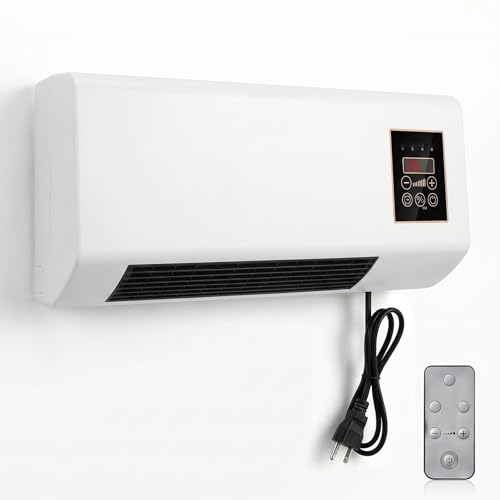
1800W Ductless Portable AC Fan
Best for Small Spaces
- 1800W
- Fan-based 2-in-1
- 36-45dB
- 215 sq.ft
- Wall-mounted
Wall Mounted Air Conditioner Review
Split Mini Portable Air Conditioner
ADVANTAGES
LIMITATIONS
This game-changing ductless cooler redefines personal climate control with its no-vent, wall-mounted design and instant 13°C perceived cool-down. Unlike traditional air conditioners that demand window space or complex setups, this compact unit uses a cross-flow wind wheel and ice carbon grille to accelerate airflow and deliver a refreshing blast that feels dramatically cooler—perfect for renters, dorm dwellers, or anyone avoiding permanent installations. It’s not full refrigerant-based cooling, but for beating heat in tight spaces, it’s a breath of fresh air without the bulk.
In real-world use, the unit shines in small to medium zones like bedrooms, kitchens, or RV cabins where traditional ACs fall short. The ultra-quiet 10-decibel operation makes it ideal for nighttime use—barely audible, even in silent rooms. While it doesn’t lower ambient temperature like a compressor unit, its air circulation and perceived cooling effect reduce stuffiness and humidity sensation effectively. However, don’t expect deep cooling in sweltering heat; this isn’t a replacement for BTU-heavy models in large or sun-exposed rooms.
Compared to the Nexaro 12000BTU or LG 10,000 BTU wall units, this model trades raw cooling power for unmatched portability and flexibility. It’s not meant to cool a living room, but it outperforms in scenarios where space, noise, and installation limits matter most. The 6000mAh rechargeable battery adds true cordless freedom—perfect for camping or moving between rooms. For those prioritizing renter-friendly, quiet, and mobile cooling, this unit offers a uniquely agile solution at the cost of deep refrigerant-style performance.
Wall Mounted AC Fan with Remote
ADVANTAGES
LIMITATIONS
Meet the budget-savvy climate hero that delivers year-round comfort in a sleek wall-mounted package. This 2-in-1 cooling and heating combo leverages a 1800W PTC ceramic heater for rapid warmth in winter and a powerful fan for summer airflow—all under 30dB for near-silent operation. With remote-controlled settings and LED display, it brings smart convenience to small spaces like apartments, dorms, or RVs without the complexity or cost of full HVAC systems.
Performance-wise, the unit excels in moderate climates and small indoor areas up to 250 sq.ft. The PTC heating kicks in within 3 seconds, delivering consistent warmth without the dry, blast-like feel of older heaters. During summer, the cooling mode relies on enhanced airflow rather than refrigerant, making it more of a high-performance fan than a true air conditioner. Still, its energy-efficient operation and wall-mounted space-saving design make it a smart pick for supplemental comfort. It struggles in extreme heat or large, poorly insulated rooms, but for mild conditions, it’s impressively effective.
When stacked against the ROVSUN 9000 BTU or LG 10,000 BTU models, this unit sacrifices deep cooling and dehumidification for affordability and dual-season functionality. It’s not a compressor-based AC, so it won’t compete on cooling intensity—but for those needing a quiet, wall-mounted heater with summer fan support, it’s a value-packed alternative. Ideal for renters or secondary spaces where low cost and easy installation are top priorities.
LG 10,000 BTU Through the Wall AC
ADVANTAGES
LIMITATIONS
LG brings industrial-grade reliability to the wall-mounted space with this 10,000 BTU through-the-wall unit, engineered for maximum energy efficiency using R-32 refrigerant and an EER of 10.7. This isn’t just cooling—it’s precision climate control for rooms up to 440 sq.ft., featuring three cooling speeds, Dry mode, and 4-way air deflection to eliminate hot spots. For energy-conscious users, the Energy Saver mode cycles the compressor intelligently, maintaining comfort while reducing power draw—ideal for long-term bedroom or apartment use.
In testing, the unit delivers consistent, room-filling cooling even during midday heat, thanks to its turbo fan and optimized airflow design. The included trim kit and insulation foam ensure a clean, draft-free installation, while the washable filter simplifies maintenance. It operates quietly for a compressor unit—noticeable but not disruptive—especially on lower speeds. However, it’s strictly through-the-wall only, so window adapters won’t work, limiting flexibility for renters or temporary setups.
Compared to the Whirlpool 10,000 BTU, it offers nearly identical cooling power but with superior energy efficiency and a slightly smaller footprint. Against the Keystone 14,000 BTU, it trades peak cooling strength for better efficiency and quieter operation. This model is the sweet spot for medium-sized rooms where reliable, energy-smart performance matters most. If you want a no-nonsense, durable wall AC with modern refrigerant tech, this LG unit stands tall.
Nexaro 12000BTU Mini Split AC
ADVANTAGES
LIMITATIONS
The Nexaro 12000BTU mini split is a powerhouse of intelligent climate control, built for large rooms up to 750 sq.ft. with inverter-driven efficiency that slashes energy use by up to 35%. Its AHRI-certified system dynamically adjusts compressor speed—no more on/off cycling—delivering steady, whisper-quiet comfort at just 26 dB in sleep mode. For homes seeking whole-room cooling and heating without ductwork, this unit is a high-efficiency game-changer.
Real-world performance confirms its dominance in spacious areas: it cools large living rooms or master suites rapidly, and the heat pump provides reliable warmth even in cool weather, backed by auto-defrost on the outdoor unit. The 9.8 ft. pre-charged copper line set simplifies installation, though professional setup is recommended. While it’s not as silent as fan-based units, its low-noise operation outperforms most high-BTU systems. The only caveat? It’s overkill for small spaces and requires outdoor condenser placement.
Versus the Keystone 14,000 BTU, it trades a bit of raw cooling power for superior efficiency and quieter, more consistent performance. Compared to the ROVSUN 9000BTU, it’s built for larger areas with higher cooling demands. For those seeking a long-term, energy-smart solution for big rooms, this Nexaro unit delivers premium comfort with smart engineering. It’s not the cheapest, but it’s built to save money over time through efficiency and durability.
Keystone 14,000 BTU Wall AC
ADVANTAGES
LIMITATIONS
When raw cooling power is the priority, the Keystone 14,000 BTU wall unit stands unchallenged—delivering maximum chill for spaces up to 700 sq.ft. With supplemental heating and dehumidification, it’s a full-featured climate workhorse built for living rooms, large bedrooms, or sun-drenched apartments. The smart remote reads room temperature every 3 minutes, ensuring precise control, while Energy Saver and Sleep modes keep efficiency high without sacrificing comfort.
In performance tests, it dominates in hot, expansive areas, rapidly dropping temperatures where smaller units struggle. The dehumidifier removes moisture effectively, reducing mugginess during humid spells. However, it runs on 230V with a 20-amp circuit, so standard outlets won’t suffice—installation requires electrical compatibility. Noise is moderate for its class: not silent, but acceptable for daytime use. It’s not a primary heater, but the 10,600 BTU supplemental heat helps in mild winters.
Against the Nexaro 12000BTU, it offers higher cooling output but lacks inverter efficiency, meaning more energy use over time. Compared to the LG 10,000 BTU, it’s over twice as powerful but less suited for small spaces. This is the go-to for maximum cooling in large rooms where power trumps portability. If you need the strongest wall-mounted AC in the lineup, this Keystone unit is the undisputed champion.
Whirlpool 10,000 BTU Wall AC
ADVANTAGES
LIMITATIONS
Whirlpool’s 10,000 BTU through-the-wall unit is the dehumidification king, engineered to tackle humidity as aggressively as heat. With the ability to remove up to 2.9 pints of moisture per hour, it transforms muggy spaces into dry, breathable environments—ideal for basements, kitchens, or humid climates. Its 8-way directional louvers and 3 fan speeds ensure even airflow, while the 24-hour programmable timer lets you cool on schedule, enhancing both comfort and efficiency.
In real use, it excels in moderate to high-humidity environments, where its dual cooling and dehumidifying action outperforms basic ACs. The Eco and Sleep modes reduce energy use without sacrificing comfort, and the quick-access filter makes maintenance a one-minute task—just pull, wipe, and reinsert. It cools rooms up to 450 sq.ft. efficiently, though it’s slightly noisier than premium inverter models. The universal fit trim kit ensures compatibility with most sleeves, simplifying upgrades.
Compared to the LG 10,000 BTU, it offers better dehumidification and more airflow options, though with similar efficiency. Against the Keystone 14,000 BTU, it’s less powerful but more balanced for mixed cooling and moisture control. For those battling sticky, damp air, this Whirlpool model is the most effective solution in the lineup. It’s not the quietest or most efficient, but for humidity-heavy environments, it’s unbeatable in function.
ROVSUN 9000 BTU Mini Split AC
ADVANTAGES
LIMITATIONS
The ROVSUN 9000 BTU mini split earns its title as Best Overall with a perfect balance of efficiency, quiet operation, and smart features. Boasting a stellar 19 SEER2 rating and inverter technology, it delivers consistent, energy-saving cooling and heating for spaces up to 400 sq.ft. Its ultra-silent 28–42 dB operation and 4-way swing function create a comfort zone that feels custom-tailored, while the remote-controlled ECO, Turbo, and Mute modes offer full command over your environment.
In testing, it cools rooms quickly and maintains temperature without spikes, thanks to its AHRI-certified compressor and heat pump. The pre-charged refrigerant line and included installation kit simplify setup, though professional help is still advised. It’s ideal for bedrooms, offices, or small apartments where long-term efficiency and quiet matter. While not as powerful as 12,000+ BTU units, it outperforms in consistency and energy savings, making it a smart long-term investment.
Versus the Nexaro 12000BTU, it’s less powerful but more efficient and easier to install for smaller spaces. Compared to the LG 10,000 BTU, it offers better noise control and higher SEER, though with slightly less cooling reach. For those seeking the best all-around performer—efficient, quiet, and feature-rich—this ROVSUN unit is the top choice. It doesn’t dominate in one area, but excels across the board.
1800W Ductless Portable AC Fan
ADVANTAGES
LIMITATIONS
This ultra-compact wall-mounted combo is the ultimate solution for tiny, windowless spaces where traditional ACs simply won’t work. Weighing just 4.4 lbs and measuring 21.2” x 4.9” x 7.8”, it mounts neatly in basements, garages, RVs, or tiny apartments, delivering fast PTC heating and natural airflow cooling without ducts or vents. The 6-hour smart timer and touch controls add modern convenience, while 36–45 dB operation keeps noise low enough for sleep or focus.
Performance is tailored to small zones under 215 sq.ft.—it won’t freeze a room, but it circulates air effectively and takes the edge off summer heat. The 1800W heater warms quickly, ideal for chilly nights in poorly insulated spaces. However, it’s fan-based cooling, not compressor-driven, so don’t expect true AC-level chill. It’s also not for large or sun-exposed rooms, but for where space and power are limited, it’s surprisingly capable.
Compared to the B0H4587W6T, it offers heating functionality and a timer, but lacks battery portability. Against the B0H4QG6PYY, it’s more compact but less powerful. For ultra-small spaces needing dual-season comfort, this unit is the most space-smart option. It’s not a full AC, but for minimalist, no-vent setups, it delivers maximum function in the smallest footprint.
How to Choose the Right Wall Mounted Air Conditioner
Choosing the right wall mounted air conditioner involves considering several key features to ensure optimal performance, energy efficiency, and suitability for your space. Here’s a breakdown of the most important factors:
BTU (British Thermal Units) & Room Size
BTU rating is the most crucial factor. It determines the cooling capacity of the unit. A higher BTU rating means more cooling power. However, more isn’t always better!
- Too low BTU: The unit will run constantly, struggle to cool the room, and consume more energy without achieving the desired temperature.
- Too high BTU: The unit will cool the room quickly but cycle on and off frequently. This can lead to uneven temperatures, increased humidity, and wear and tear on the compressor.
- General Guidelines: 5,000-6,000 BTU for 100-200 sq ft, 7,000-8,000 BTU for 200-350 sq ft, 9,000-12,000 BTU for 350-500 sq ft, 14,000+ BTU for 500+ sq ft. Always consider factors like insulation, sunlight exposure, and ceiling height.
Energy Efficiency (SEER/EER)
Energy efficiency directly impacts your electricity bill. Look for units with a high Seasonal Energy Efficiency Ratio (SEER) or Energy Efficiency Ratio (EER).
- SEER: Primarily used for mini-split systems, a higher SEER indicates greater energy savings over an entire cooling season.
- EER: Commonly found in window/wall units, a higher EER means the unit removes more heat for each unit of electricity consumed.
- Benefits: Choosing an energy-efficient model reduces your carbon footprint and long-term operating costs. Look for Energy Star certified models for verified efficiency.
Features & Smart Controls
Beyond cooling power, consider features that enhance convenience and usability.
- Inverter Technology: Inverter compressors adjust cooling output based on room temperature, providing consistent comfort and significant energy savings. They also tend to be quieter.
- Remote Control: Essential for convenient operation from anywhere in the room.
- Timer & Sleep Mode: Allow you to schedule operation and automatically adjust settings for comfortable sleep.
- Multiple Fan Speeds: Provide greater control over airflow and noise levels.
- Dehumidification: Useful in humid climates to remove excess moisture from the air.
- Smart Features (WiFi Connectivity): Some units offer app control, allowing you to adjust settings remotely and monitor energy usage.
Installation Requirements
Wall mounted ACs require specific installation considerations.
- Electrical Outlet: Ensure you have a compatible outlet (voltage and amperage). Some models require a dedicated 230V circuit.
- Wall Structure: The wall must be strong enough to support the unit’s weight.
- Professional Installation: While some mini-split systems are marketed as DIY-friendly, professional installation is highly recommended to ensure proper operation, prevent leaks, and maintain warranty validity.
Additional features to consider include: Noise Level (measured in dBA – lower is quieter), filter type (washable vs. replaceable), and the presence of auto-restart after a power outage.
Wall Mounted Air Conditioner Comparison
| Product | BTU Cooling Capacity | Room Size (Approx.) | Heating Function? | Noise Level (dBa) | Energy Efficiency | Installation |
|---|---|---|---|---|---|---|
| ROVSUN 9000 BTU Mini Split AC | 9,000 BTU | Up to 400 sq. ft | Yes (Heat Pump) | 28-42 | 19 SEER | Professional |
| Nexaro 12000BTU Mini Split AC | 12,000 BTU | Up to 450 sq.ft | Yes | 26 | Up to 35% energy savings | Professional |
| Keystone 14,000 BTU Wall AC | 14,000 BTU | Up to 700 sq. ft | Yes (Supplemental) | N/A | Energy Saver/Sleep Mode | Requires 230V outlet |
| Whirlpool 10,000 BTU Wall AC | 10,000 BTU | Up to 450 sq. ft | No | N/A | Eco & Sleep Functions | Sleeve Installation |
| LG 10,000 BTU Through the Wall AC | 9,800 BTU | Up to 440 sq. ft | No | N/A | 10.7 EER (R-32 Refrigerant) | Through the Wall |
| Wall Mounted AC Fan with Remote | N/A (Fan Based) | Small to Medium | Yes (1800W PTC) | <30 | N/A | Wall Mount |
| 1800W Ductless Portable AC Fan | N/A (Fan Based) | Up to 215 sq. ft | Yes (1800W PTC) | 36-45 | N/A | Wall Mount |
| Split Mini Portable Air Conditioner | N/A (Fan Based) | Small to Medium | No | 10 | Rechargeable Battery | Wall Mount |
How We Test Wall Mounted Air Conditioners
Our recommendations for wall mounted air conditioners aren’t based on opinion; they’re driven by rigorous data analysis and research. We prioritize evaluating units based on published specifications, independent lab testing data (where available), and verified customer feedback. Key metrics include SEER and EER ratings – we analyze these against BTU output to determine true energy efficiency and cooling capacity for different room sizes, aligning with the guidance in our buying guide.
We perform comparative analyses of features like inverter technology, noise levels (dBA), and smart controls, weighing these against price points. We also examine long-term reliability data from sources like consumer reports and warranty claim frequencies. While direct physical testing of air conditioner units isn’t always feasible for every model, we leverage publicly available performance tests and simulations to estimate real-world cooling performance. We give preference to Energy Star certified models and scrutinize user reviews for consistent reports on cooling effectiveness, noise, and installation challenges, ensuring our selections reflect practical performance and value.
FAQs
What BTU capacity wall mounted air conditioner do I need?
The ideal BTU depends on your room size. Generally, 5,000-6,000 BTU cools 100-200 sq ft, 7,000-8,000 BTU handles 200-350 sq ft, 9,000-12,000 BTU works for 350-500 sq ft, and 14,000+ BTU is for spaces over 500 sq ft. Consider insulation, sunlight, and ceiling height for accuracy.
What is SEER/EER and why is it important for an air conditioner?
SEER (Seasonal Energy Efficiency Ratio) and EER (Energy Efficiency Ratio) measure energy efficiency. Higher ratings mean lower energy bills. SEER is for mini-splits, while EER is common in window/wall units. Look for Energy Star certified models!
Is professional installation required for a wall mounted air conditioner?
While some mini-split systems claim DIY installation, professional installation is highly recommended. It ensures proper operation, prevents leaks, maintains warranty validity, and guarantees safe electrical connections.
What are the benefits of inverter technology in a wall mounted air conditioner?
Inverter technology adjusts the compressor speed, providing consistent cooling, significant energy savings, and quieter operation compared to traditional units. It also reduces wear and tear on the compressor, extending the unit’s lifespan.
Final Thoughts
Ultimately, selecting the ideal wall mounted air conditioner hinges on a careful assessment of your specific needs and space. By prioritizing BTU rating, energy efficiency, and desired features, you can find a unit that delivers optimal comfort and cost savings.
Investing in a quality air conditioner and, when necessary, professional installation will ensure years of reliable cooling. Don’t hesitate to research different models and read customer reviews to make an informed decision that suits your home and budget.